
Featured SPEAKERS
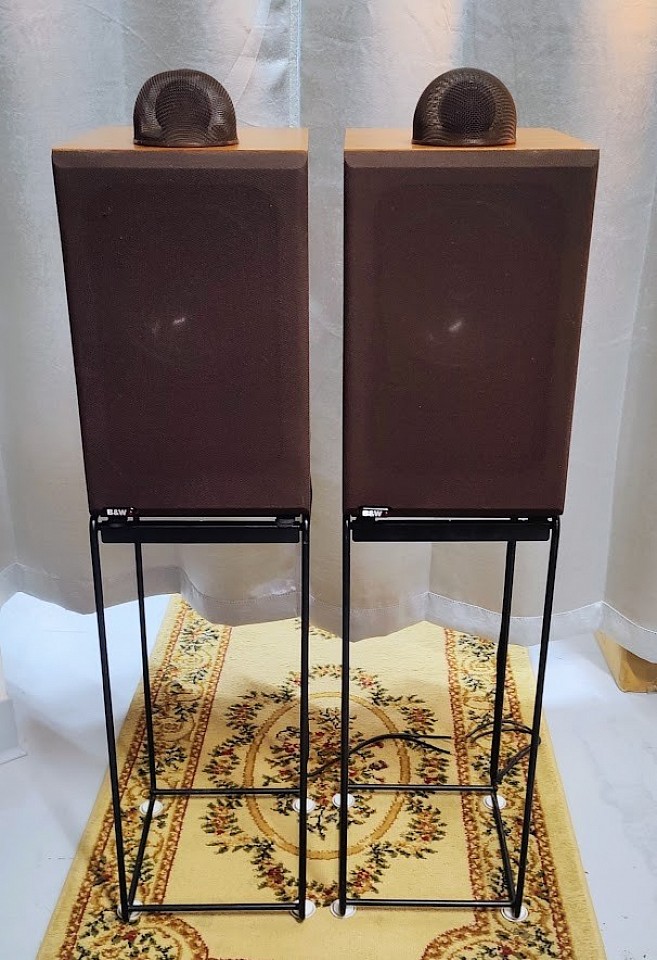
B&W DM-17 Limited Edition
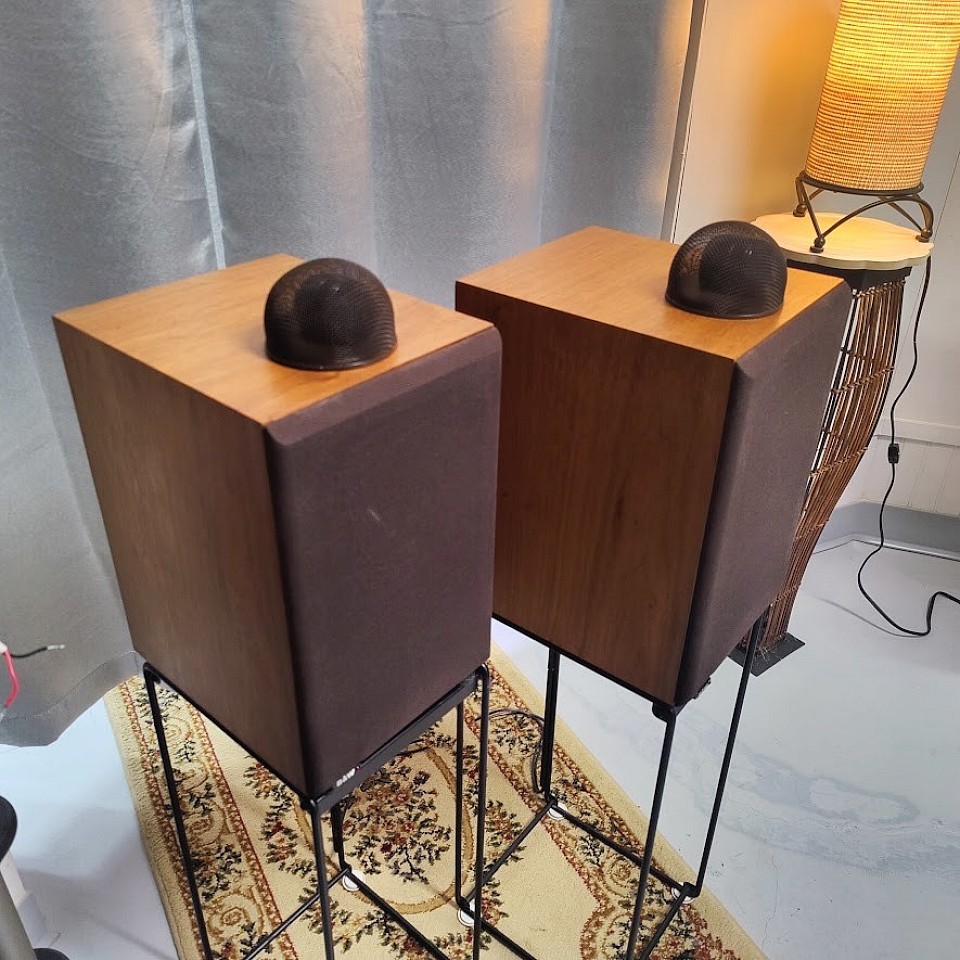
B&W DM-17 Limited Edition
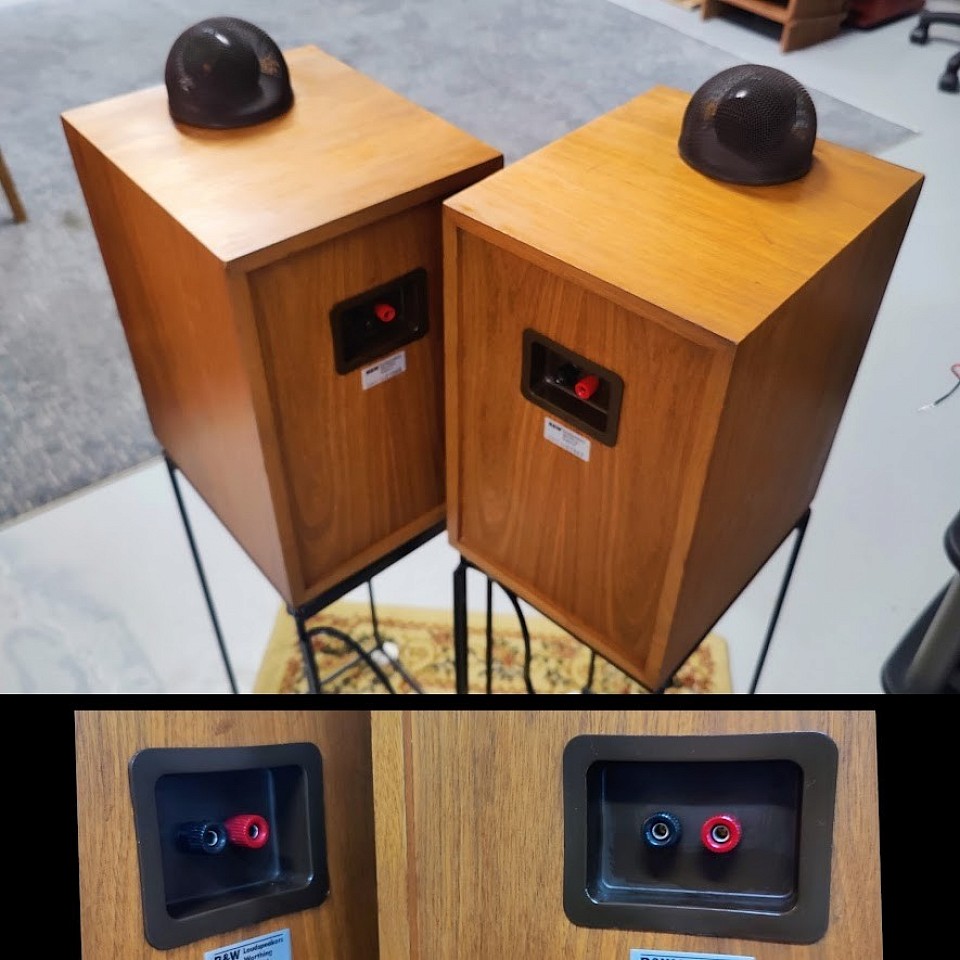
B&W DM-17 Limited Edition
B&W DM-17 Limited Edition
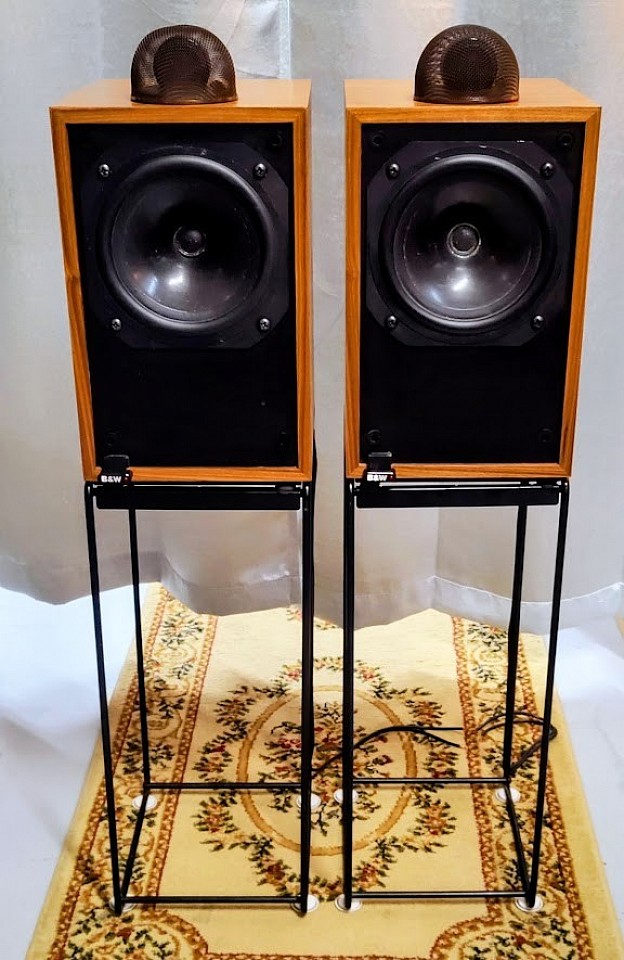
B&W DM-17 Limited Edition
(England '82-'84) $500
In pristine cosmetic condition, fully serviced & tested, this pair of Bowers & Wilkins DM-17 Limited Edition bookshelf speakers are accurately defined as true mini-monitors.
They have the desirable walnut enclosures; the unique and very rare factory stands are included.
The hefty and hermetically sealed enclosures were designed as 2-layer structures consisting of 1/2" thick high density particle board, 1/4" Bitumen pads and a 3/4" thick front baffle assemblies.
At 85 dB, they are not considered very efficient; as such, they need some very good, solid amp power to make these monitors do what they were designed to do! Any concerns about too much amp power is taken care of because B&W was clever to include a built-in "Audio Powered Overload Circuit (APOC) system".
NOTE: The APOC system reads the voltage applied to the voice coil of each unit, and when the limit is exceeded, the relay operates to cut the input signal, thereby preventing thermal damage due to overload. The red LED next to the B&W logo lights up while the APOC system is operating and automatically recovers after an overload condition has passed.
It should also be noted that the DM-17 was one of the very first of the B&W designs to incorporate the tweeter housing isolated on the top of the cabinet.
The drivers:
~The 6" mid-bass driver is made of ferritic material that had been treated with the same dumping treatment as the woofer. The ferritic material is made of highly crystalline, highly rigid polymer that provides tight bottom end sound pressure levels.
~The 1" dome-shaped tweeter is installed in its own protective dome screen and located on the top of the cabinet. Constructed of woven polyester fiber due to its excellent characteristics and, thanks to the use of a strong magnet, the overall volume was kept to a minimum.
Crossover network:
The DM-17 uses a butterworth 24db/oct. crossover with matched components. B&W was famous for measuring each capacitor and coil so they could match them exactly - if the marked value was only within 10% they would get them to within 1%. (another reason that B&W is so widely admired for their premium speaker designs)
From the B&W dealer sheet: (original MSRP $900/pair)
"The DM17 Limited comes into the B&W range equipped to occupy the top position among compact two-unit monitors. Despite its miniature dimensions, its performance may be judged by standards as exacting as those applied to full size monitor systems. For those whose ear demands such standards, but who's listening room is of limited size, the DM17 Limited now clearly becomes the loudspeaker of choice.
Regarding the placement of the high frequency driver on the top of the enclosure; it avoids the situation with normal cabinet construction, where sound waves from the tweeter not only radiate towards the listener but also travel along the baffle surface towards the cabinet edges.
When sound waves meet sharp cabinet edges they re-radiate (a process known as diffraction) and, due to the time delay, interfere with and time-smear the sound coming directly from the drive unit.
Having the tweeter separate from the main cabinet also allows its time-alignment with the midrange driver to be finely adjusted so the two outputs add perfectly in phase through the crossover region."
Essential specs:
Minimum amp power required: 40 watts
Nominal Impedance: 8 Ohm
Frequency Response: 85 - 20000 Hz
Sensitivity: 85 dB
Dimensions: 16"H x 10"D x 8.5"W
Weight: 20 lbs each
About Bowers & Wilkins...
The sleepy coastal town of Worthing in South England might not look like a hotbed of 1960s freewheeling experimentation, but for audio fans it’s a place that’s synonymous with innovation. Thanks to the first Bowers & Wilkins speakers built there in the early years of the company, music lovers could experience albums such as Sgt. Pepper and Pet Sounds in new, mind-expanding depth and clarity.
In 1966, John Bowers set up his company with his partner Roy Wilkins and began assembling speaker systems in the workshop of their electronics shop and designed their first speaker, the P1. The profits from this beginning allowed them to invest in new calibration equipment. By 1968, the high quality "Domestic Monitors" (DM1, DM3) brought more recognition from the audiophile community.In the 70's, with John Bowers at the head of the company, things really took off...with the development of curved cabinet forms and the use of new cone materials such as Kevlar, they hit it big with the Model 801 which almost immediately became the reference speaker of choice for many of the world's leading recording studios.
Also, the first model DM6 from acclaimed designer Sir Kenneth-Grange appeared in 1976. The later DM7 and DM17 were the first that featured the iconic "tweeter-on-top" that's still used today.
In the 90's the appearance of the (now very famous) B&W "Nautilus" which totally upended the preconceived notions of speaker design.Even though John Bowers passed away in 1987, today, in the so-called digital age, B&W just keeps moving along with its latest versions of the Diamond Series and so much more.
++++++++++++++++++++++++++
++++++++++++++++++++++++++
Jensen System C
Jensen System C
Jensen System C
Jensen System C
Jensen System C3
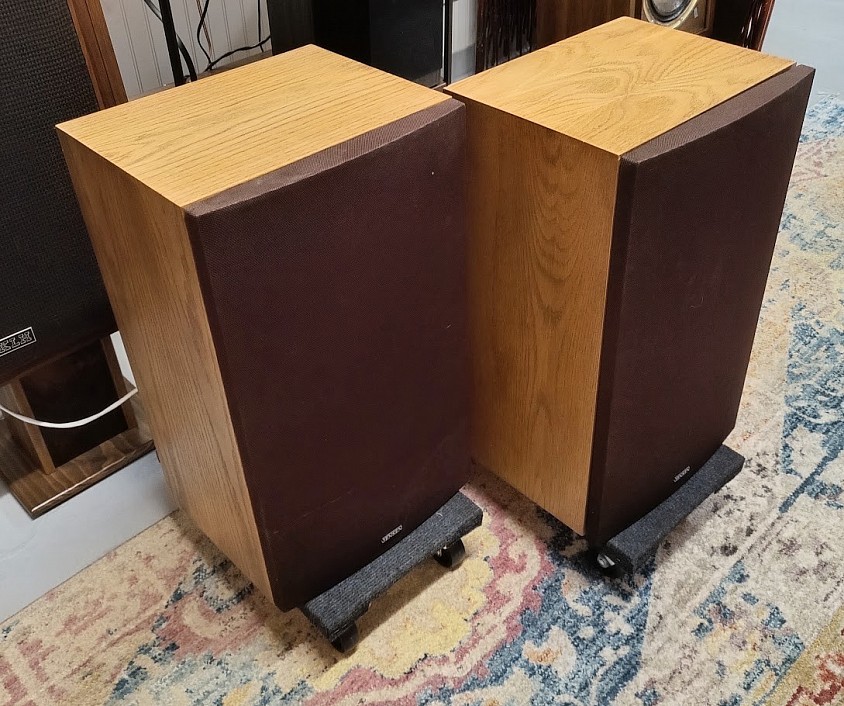
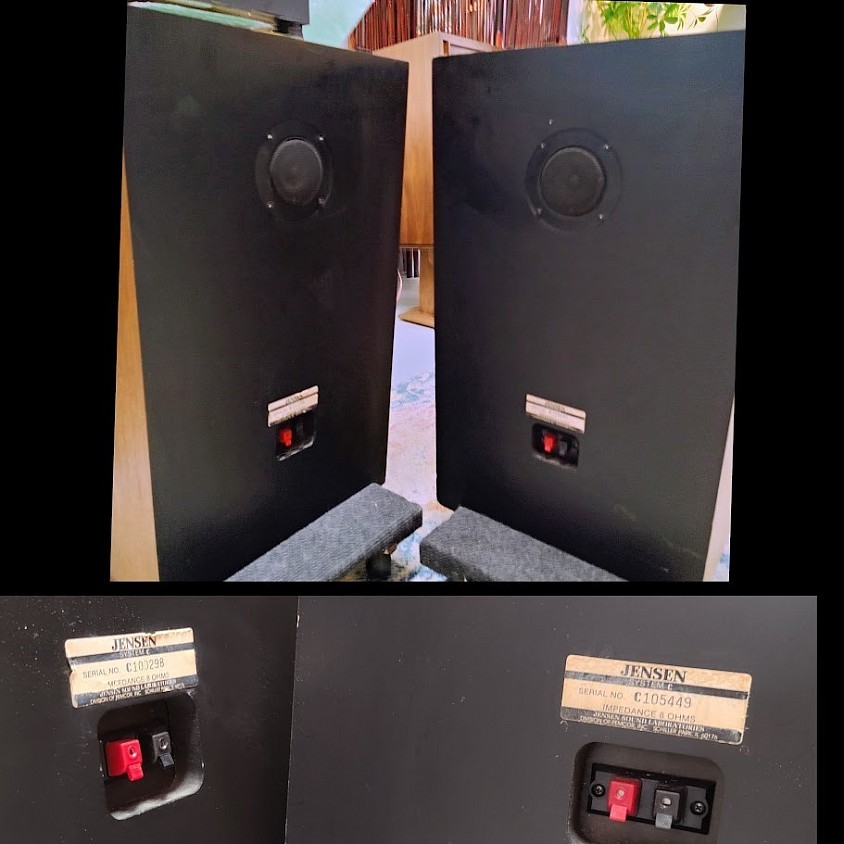
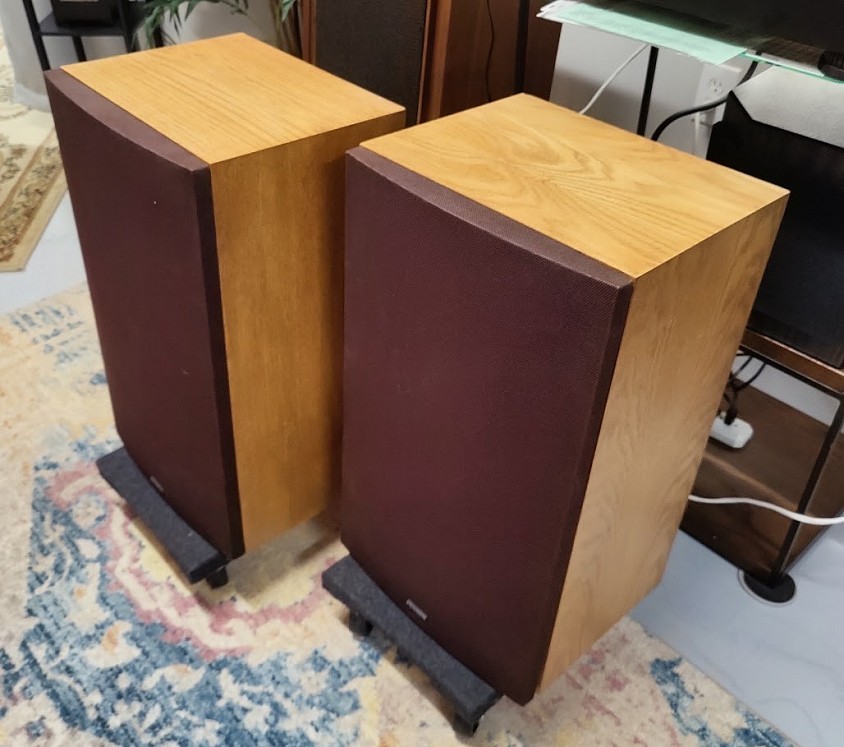
Obtained from the original owner, this pair of Jensen System C(3*) is rarely seen these days. These were designed at a time when Jensen's reputation for high quality home HiFi speaker systems was globally respected by "audiophiles".
*NOTE: Jensen produced a high-end "System" series of home loudspeaker systems in the late '70s (such as the System B, System C, and System 500). The System C "3" identifies it as a 3-way system.
These vintage floor-standing or bookshelf units featured acoustic suspension and/or ported designs with high quality drivers. They are extremely rare and there is little info regarding actual production numbers.
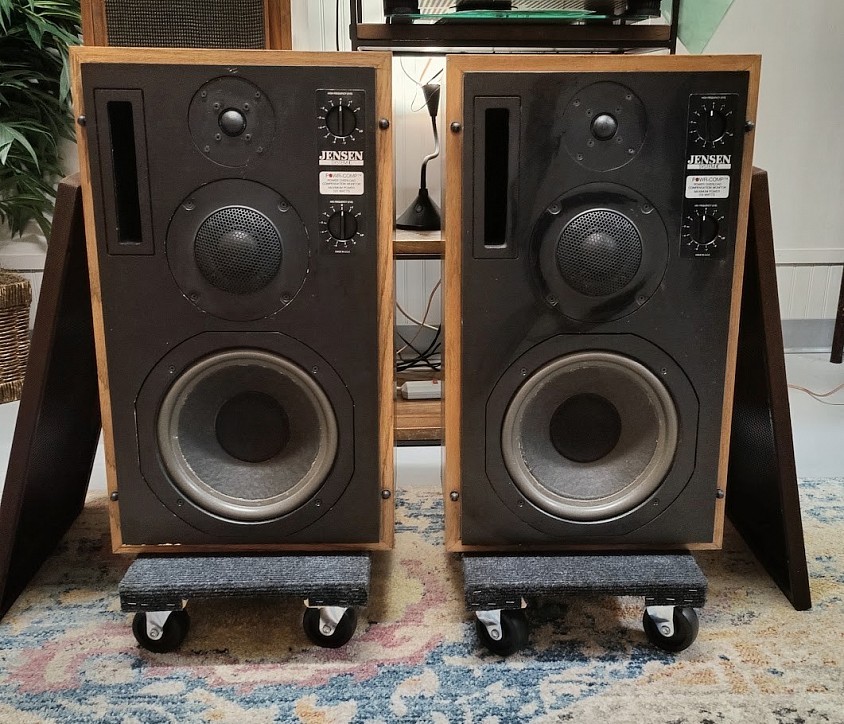
The C3 is a 3-way, 5-driver floor-standing system with beautiful solid oak cabinets. These speakers are 100% original and the woofers have been refoamed.
Servicing also included removal of the drivers to gain access to the crossover network to check values of the caps; surprisingly (or not) thanks to the great care and sparse use by the owner, they are all well within their original values. While we're satisfied with the crossovers being able to keep the soundstage extremely acceptable, there is much chatter online about crossover kits for those who may want to do a deeper dive into restoration.
Additionally, the cabinets have been sanded and refinished with a natural light oak sealer.
The front baffle of each enclosure features a typical vertical lineup with a single 12" woofer at the bottom, a single 5" dome midrange (with a perforated protective metal screen) and a single Audax 1" dome tweeter. On the back is a single 1" phenolic tweeter that adds a "spacious 3-D ambience" to the overall soundstage.
The unusual grills are curved with a flexible, perforated frame behind the brown linen cloth; they lightly fit right into the beveled edges of the baffle and are in perfect condition. The heavy duty front baffles are well thought out with L-Pads for mids & highs and front vertical rectangular bass ports; As a matter of fact, the baffles present such a "high-end" look it's almost a shame to cover them with the grills.
Back story:
When first introduced in the late 70's, the Jensen System C3 was a specialized 3-way "audiophile" design with an MSRP of about $620/pair. Some HiFi shops were given leeway by Jensen to sell at a "rock bottom" price of $520. It should be noted that these guys weigh a sturdy 41 lbs each.
These are REALLY nice speakers! They feature high-quality woofers, dome midranges, and an advanced Audax front tweeter. A unique historic trait of the System C was its rear-facing phenolic tweeter, added to create an expansive, open "3D" soundstage in home environments.
It's been said that the crossovers were probably designed with computer aided design, where each driver was measured in the system, then the designer would select a "target" response for each driver and a computer optimization program would search for a solution. This was well documented in the 80s by other well known companies like B&W, KEF, etc.
Specs:
Power Handling: Up to 100 watts (some revisions/monitors noted up to 125 watts peak)
Nominal Impedance: 8 Ohms
Sensitivity / Efficiency: 96 dB
Crossover: 1,200 Hz and 5,000 Hz
12" low-frequency driver
Midrange: Two 5" cone
Tweeter: two 1" horn-type
Enclosure Dimensions: 14.5"W x 12"D x 25"H
Weight: 40.5 lbs each
Jensen Speakers is one of the most recognized names in the electronics industry with a history that stretches over a century back to 1915. Peter L. Jensen dedicated his life to innovation and today's Jensen musical instrument speakers continue the essence of that innovation. Peter L. Jensen was born in 1886 in Falster, Denmark and came to America in 1909. In 1915, working alongside Edwin Pridham, Peter Jensen developed the "Magnavox", the first loudspeaker. Magnavox speakers were predominantly used for public address systems, famously first used publicly in 1919 to amplify President Woodrow Wilson's speech in San Diego.
In 1927, Peter Jensen founded Jensen Radio Manufacturing Company and began producing speakers for both military use and radios. The company later began to produce commercial loudspeakers for public use.
In the mid '40s Leo Fender developed one of the first guitar amplifiers and chose Jensen speakers for their excellent tone. Throughout the '40s, '50s and most of the '60s, Fender, Ampeg, Gibson and all the other major amplifier companies used Jensen musical instrument speakers.
In the late '90s, under a licensing agreement, SICA Altoparlanti, an Italian speaker manufacturer, commenced production of the legendary Jensen speakers. These Jensen "reissues", after intensive research and analysis, were made to the same specifications as the original Jensen speakers used by Leo Fender and others. Following the success of these reissues, Jensen has released new speakers utilizing the same quality design as the original Jensen speakers, but dedicated to modern music, including speakers in the Jensen Jet Series.
The Jensen name is synonymous with classic vintage tone, and is the pioneer in modern state-of-the-art speakers today.
+++++++++++++++++++++++++
+++++++++++++++++++++++++
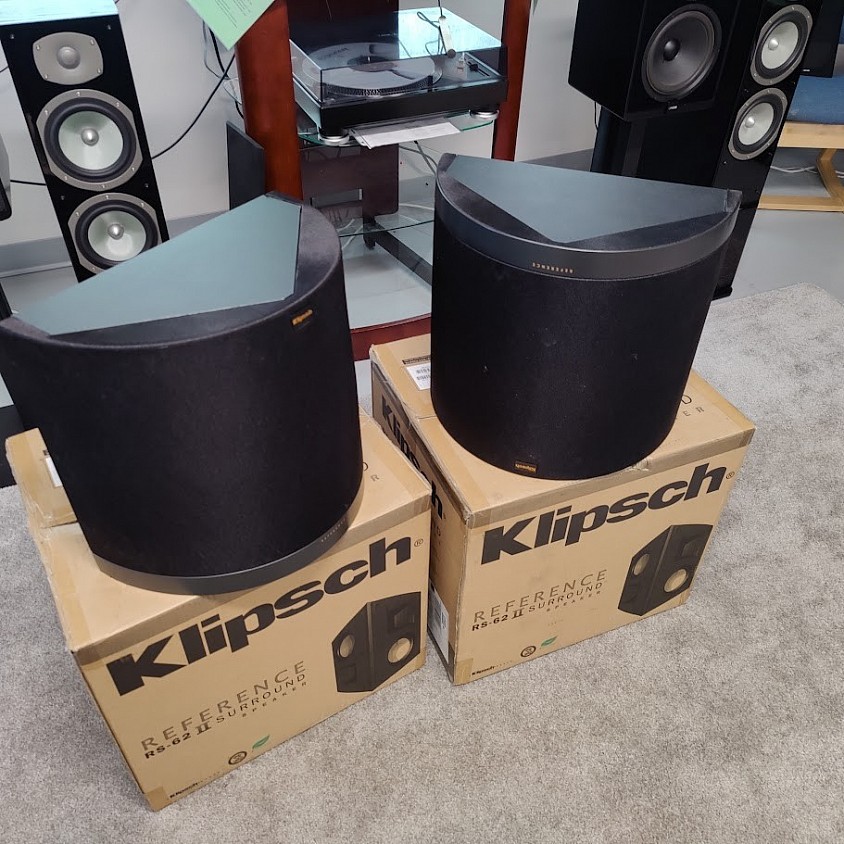
Klipsch Reference RS-62-II
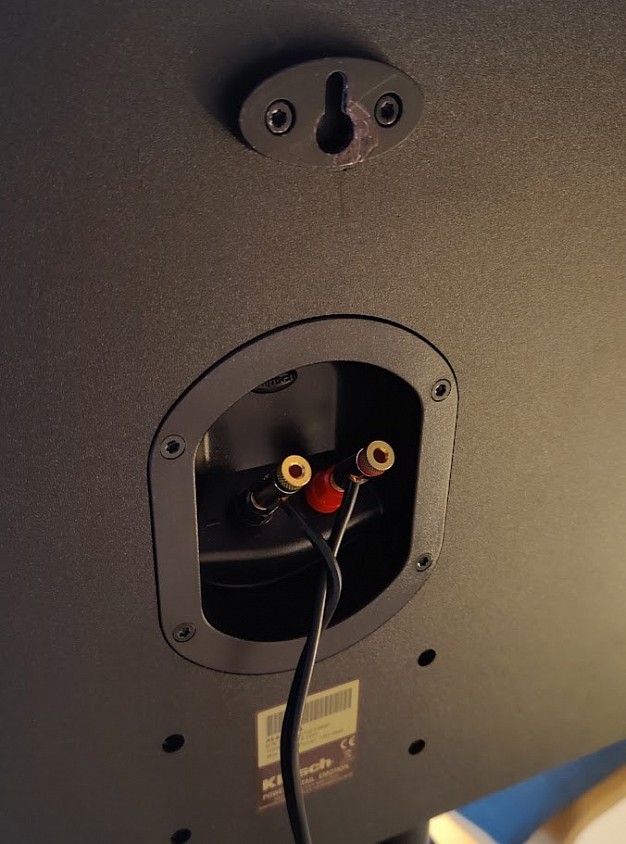
Klipsch Reference RS-62-II
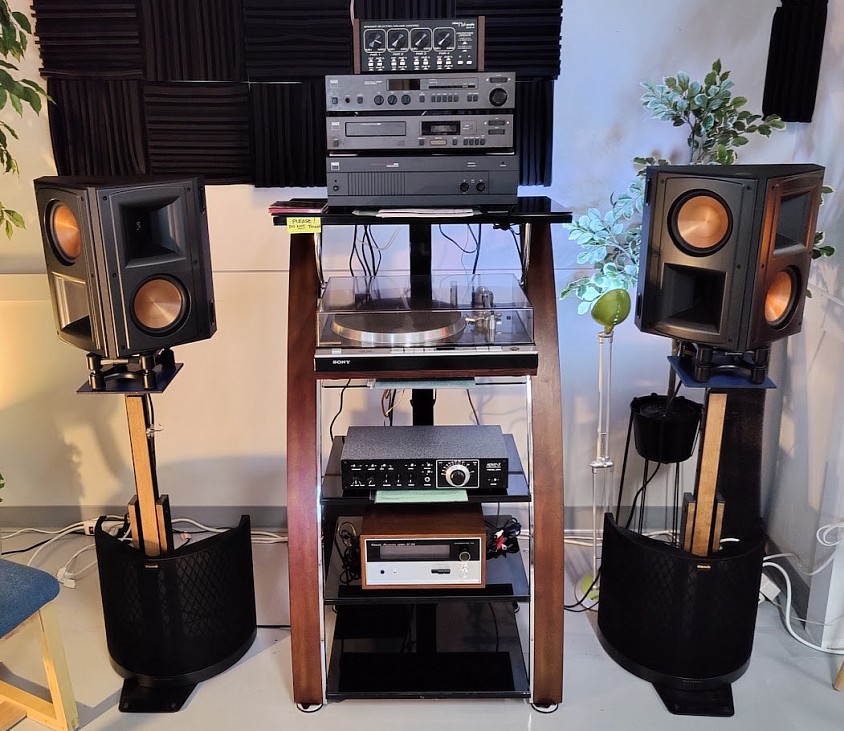
Klipsch Reference RS-62-II (sub hidden in back)
Klipsch Reference RS-62-II
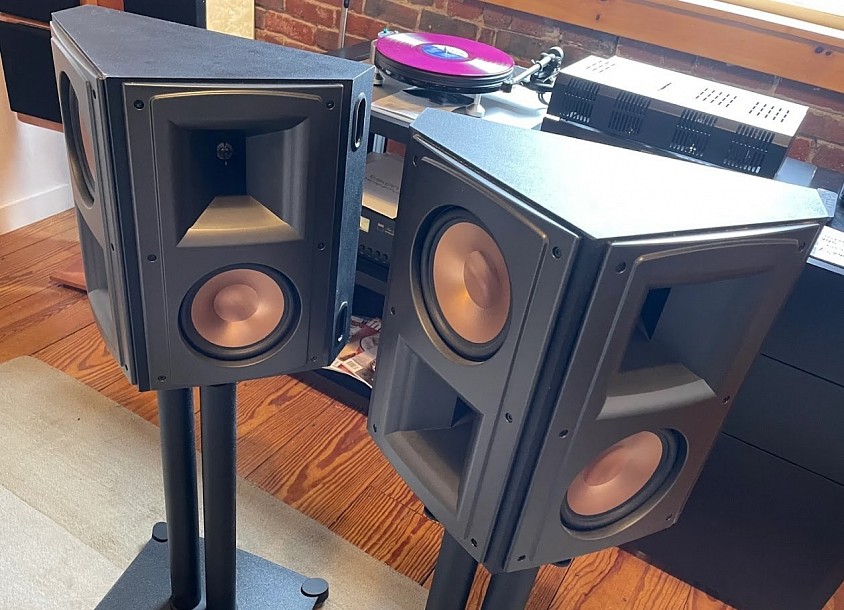
Klipsch Reference RS-62-II
('10 -'15) $650
Obtained from the original owner, this pair of Klipsch Reference RS-62-II are completely original in pristine cosmetic condition. All drivers, crossovers are 100% functional. The original boxes and documentation are included. The original cost of just these two speakers alone was $1200.
Although these were designed by Klipsch as surround speakers, we use them as main speakers along with the addition of a small but complementary high quality powered subwoofer.
The result? In this type of setup they produce a fantastic soundstage while presenting themselves as a very attractive focus in practically any high-end stereo system that has a solid amp as the anchor. In our opinion, there's really no need to have the entire Klipsch surround system (at a cost of $3100) in order to enjoy the latest Klipsch technology for your simple 2-channel stereo system (providing you add an unobtrusive powered subwoofer of high quality, that's discreetly tucked away out of sight.)
Now in its fifth generation, these Reference II models yield even higher sound quality due to re-engineered drivers and a new crossover system. Complete with proprietary "Tractrix" Horn technology, each speaker offers the precision, clarity and effortless power for which Klipsch is known.
They exude elegance with several cosmetic upgrades, including new black metallic finished baffles, machined "Cerametallic" woofers, logos and feet.
The "wrap-around" curved grills attach magnetically. On the rear are gold plated speaker connections and factory installed wall hangers.
Specs / Features:
~Type: 2-way dipole bass reflex
~Chassis:
~Midrange: Two 6.5" Cerametallic cone woofers per enclosure
~Tweeter: Two 1" Titanium Compression driver paired with 90° x 60° square Tractrix Horn per enclosure
~Power handling (nominal / music): 150 / 600 watts
~Efficiency: 97dB
~Frequency response: 50 - 24000 Hz
~Crossover: 1300 Hz
~Impedance: 8 Ohm
~Dimensions: 16"W x 15"S x 9.2"D
~Weight: 23 lbs each
+++++++++++++++++++++++++++++++
+++++++++++++++++++++++++++++++
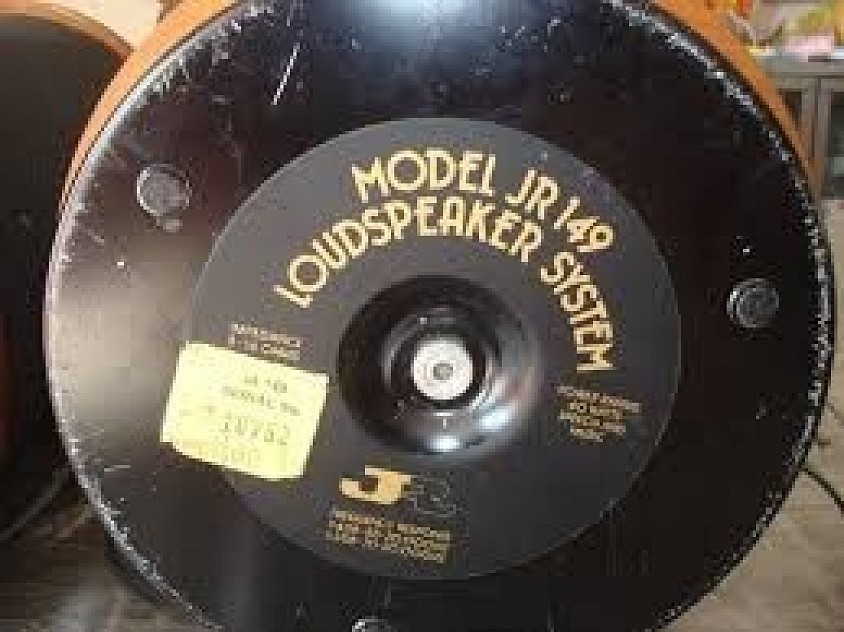
Rogers JR149-MK1 (bottom plate covering crossovers)
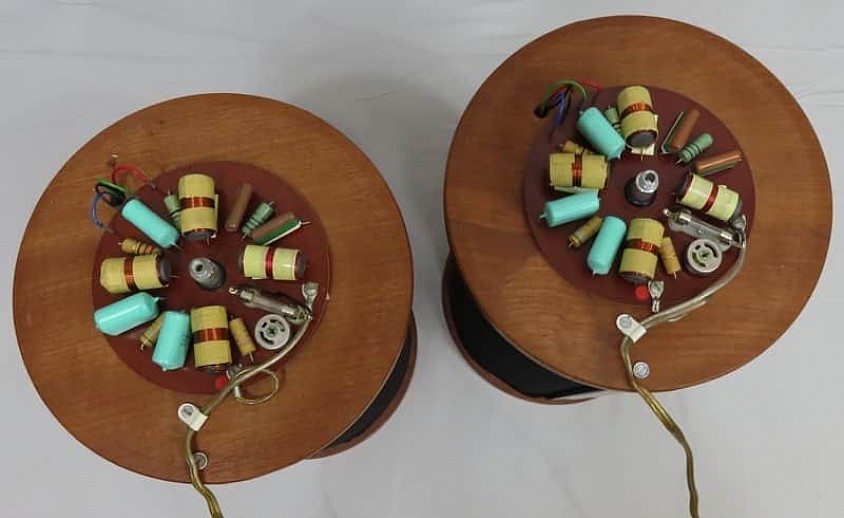
Rogers JR149-MK1 (crossovers located on the bottom)
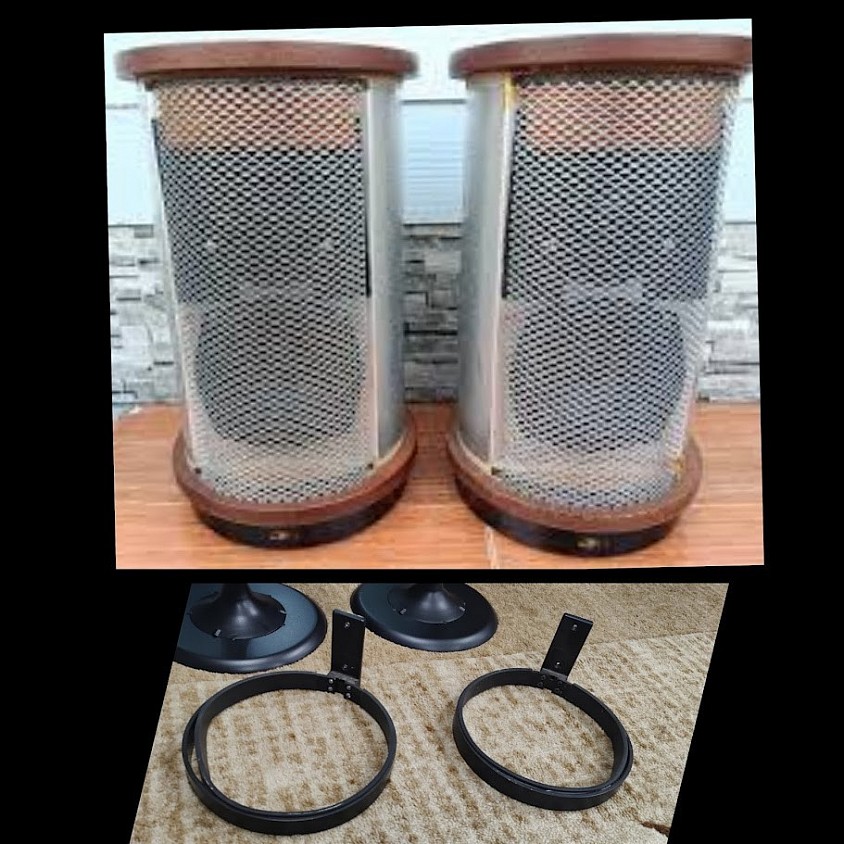
Rogers JR149-MK1 (top: grills off) (bottom: wall hangers)
Rogers JR149-MK1
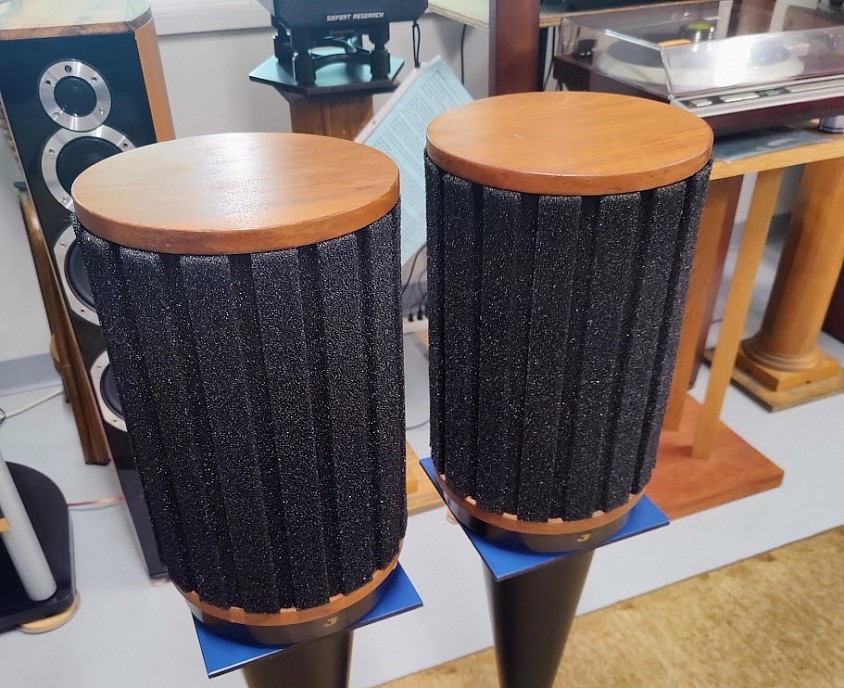
Rogers JR149-MK1
('78-'83) SOLD (includes rare factory wall hangers)
In absolutely amazing operating condition, this pair of the elusive Rogers JR149 are cosmetically near perfect as well. These diminutive round speakers were first designed in 1977 by *Jim Rogers. Since that introduction, the JR149 has become mysteriously legendary for a number of reasons.
After many tweaks and more testing, the JR149 was released for sale in 1978 as a ‘technical breakthrough’, the JR149 exhibied some strong ideas when it came to the cabinet structure. It's a 2.6 gallon volume design with the circular enclosure wall made from high grade aluminium and measuring 12" high by around 9" in diameter.
Designed as an infinite baffle sealed enclosure, it is very heavily damped with thick acoustic foam. Below the decorative solid oak caps at each end of the cylinder are two fiber discs held under tension via a steel rod, which run through the enclosure from top to bottom. Crossover and cable connections are in a separate metal housing underneath the loudspeaker – matched to the rest of the speaker, as Rogers had even made a specially designed round printed circuit board for the crossover section.
The obvious and primary reason would have to be the surprisingly satisfying soundstage that comes out of these smallish, round enclosures. Hidden behind the articulated foam grills and then behind the second tier round metal housing are the high quality drivers: KEF T27 mylar tweeter & KEF B110 Bextrene cone midbass. Those excellent drivers take their cue from the intricately designed crossover network that is cleverly tucked into the easily accessed bottom portion of each enclosure.
At their best, they should be hung on the wall with a slight toe-in. Fortunately, this pair has the extremely rare, specially designed wall hangers. These heavy iron hangers are perfectly designed to cradle the bottom portion of the enclosures for a snug fit while keeping them free from any loss of resonance.
NOTE: The JR149 model is among the most attractive speakers ever made. When matched with the right amplifier few speakers of these dimensions out perform them and none are more acceptable in a modern living room.
Features and upgrades:
Rebuilt crossovers with many new inductors and/or capacitors.
New articulated foam grill covers
Factory wall hangers
Solid oak top end caps
Specs:
Frequency Response: 70Hz to 20kHz
Impedance: 8 Ohms
Power Handling: 60W
Recommended Amplifier: 20 to 100W
Crossover Frequency: 3000 Hz
Sensitivity: 90dB
Dimensions: 9" diameter x 15" tall
*About Jim Rodgers...
Mr Rogers worked as an engineer for the BBC where he designed the famous BBC LS3/5A bookshelf speaker.
The '70s saw the rise of home entertainment from the record deck to hi-fi (high fidelity) and British designed amplifiers, speakers and turntables became the envy of the world. In 1977 Jim Rodgers designed the JR149, based upon the renowned LA3/5A encased in a heavy gauge aluminium cylinder with wooden end caps.
He went on to design a super woofer to extend the base down to 30Hz and a larger model, the JR150.
++++++++++++++++++++++++++++
++++++++++++++++++++++++++++
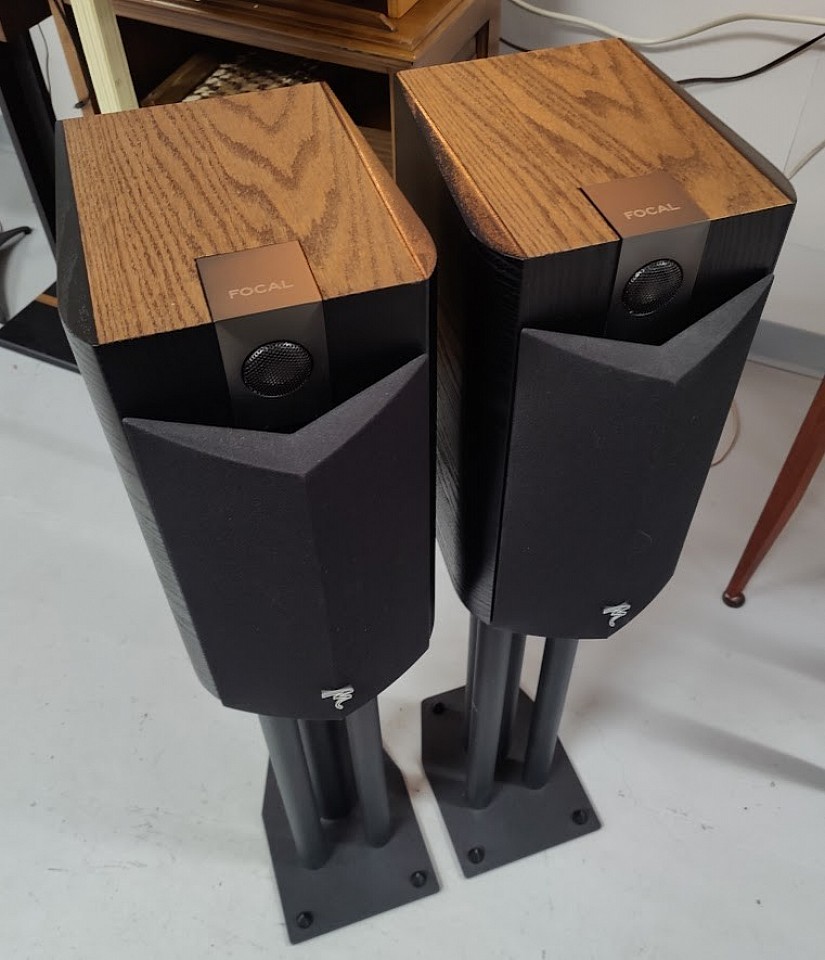
Focal Chorus 706 V2
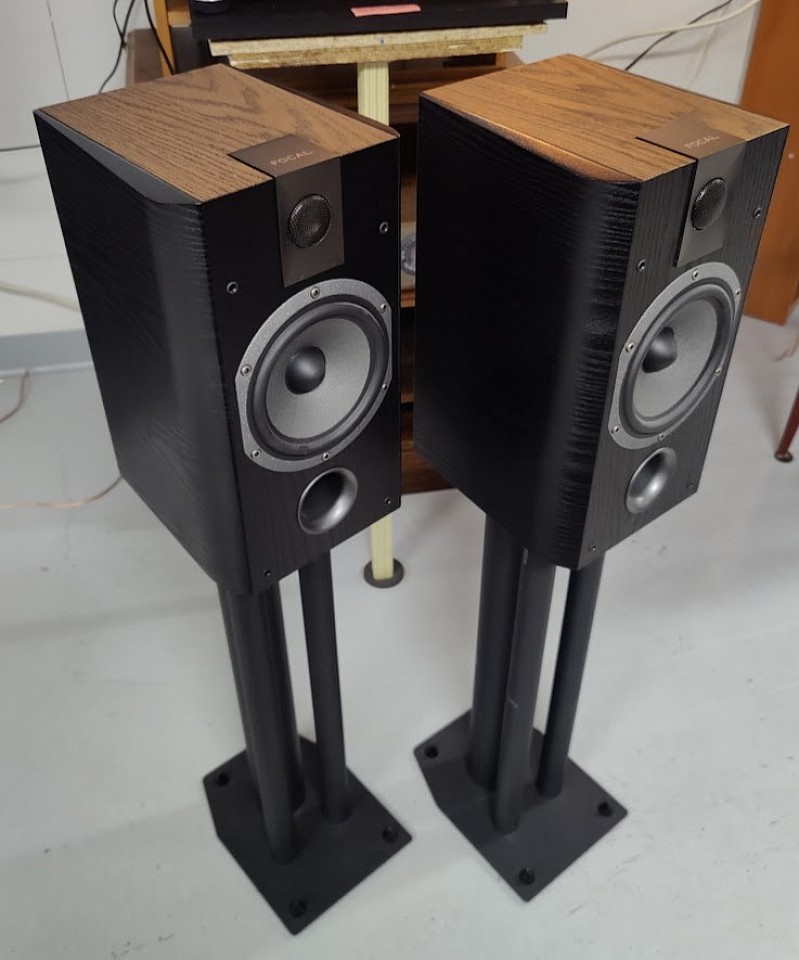
Focal Chorus 706 V2
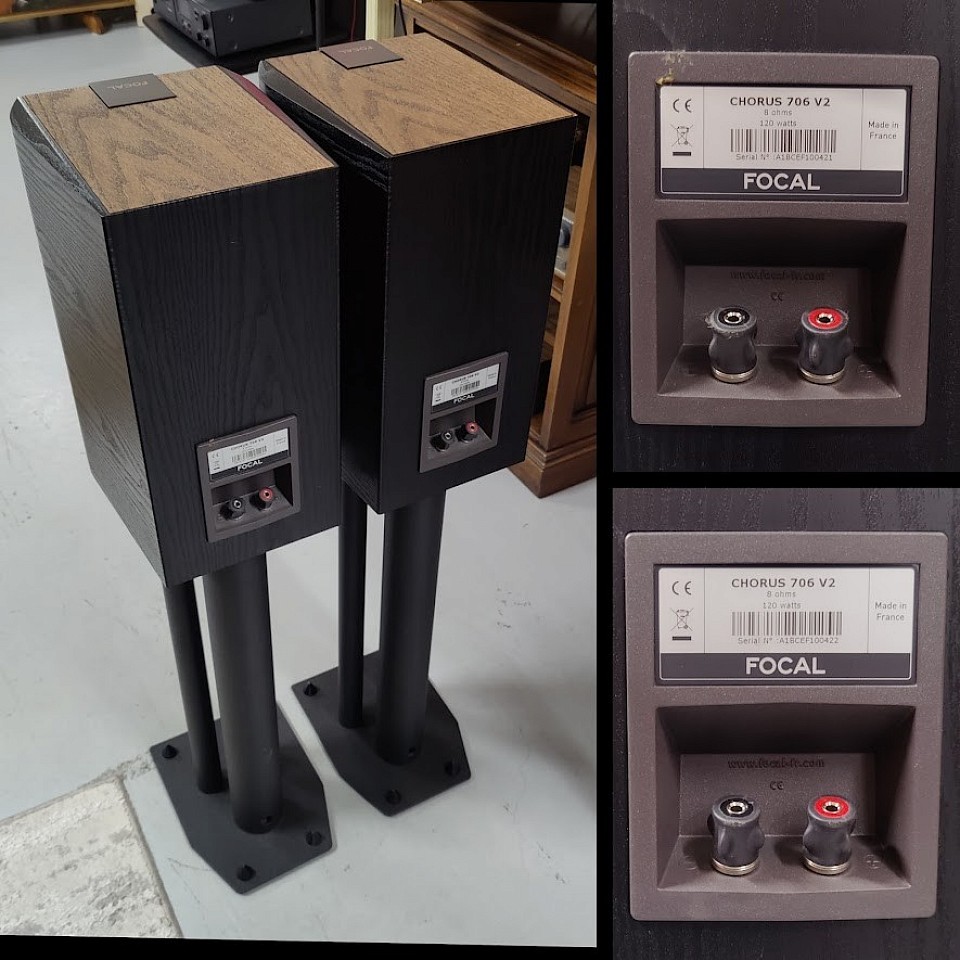
Focal Chorus 706 V2
Focal Chorus 706 V2
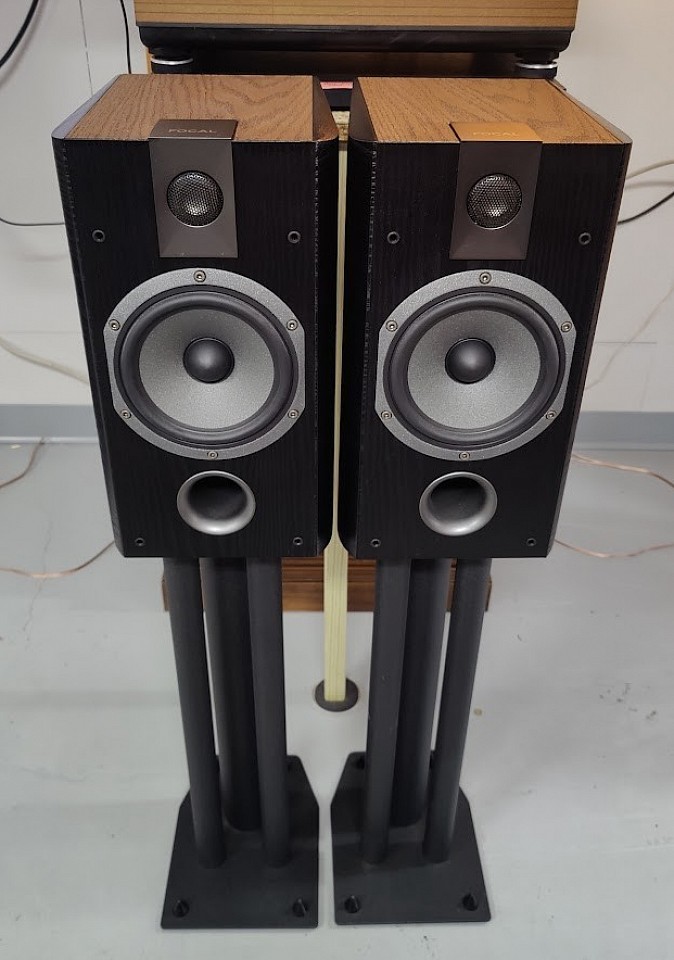
Focal Chorus 706 V2
(France '15 -'18) $650 (includes stands)
With perfect cosmetics and completely original internals, this pair of Focal Chorus 706 V2 is fully operational. The cabinets have a custom finish featuring real dark mahogany veneer tops with satin ebony on the side panels. They come with an excellent pair of 24" tall, heavy duty floor stands made of black baked enamel over tubular steel.
Made in France from the company that's been making audiophile level speakers since the 80's, the Chorus 706 V2 bookshelf speakers are beautiful to behold and listen to.
The Chorus 706 V2 speakers boast Focal’s latest 1″ aluminum-magnesium inverted dome tweeter. Inverting the dome optimizes the connection between the voice coil and the dome, maximizing efficiency and precision. Plus, the tweeter’s new lightweight polyurethane microcellular foam suspension allows the dome to move more freely for lower distortion, greater accuracy, and smoother sound. With its impedance rated at an "easy-to-drive" 8 ohms, any high quality amp rated between 50-120 watts per channel should be just fine.
Drivers:
The 706 V2 mates a 6.5″ Polyglass mid/bass driver with a 1″ aluminum-magnesium inverted dome tweeter.
The mid/bass driver is a refinement of a Focal design (in production for 15 years) that uses a coating of tiny hollow glass spheres on the surface of the cellulose-fiber (paper) cone—increasing stiffness while only marginally increasing cone mass.
Similarly, the tweeter is a refined version of Focal’s inverted-dome unit, featuring a new suspension and magnet structure that reportedly reduces distortion at the crossover frequency by a factor of six.
Cabinet:
The 706 V2’s enclosure construction is truly impressive for a loudspeaker at this price level. Cabinet rigidity is usually given short-shrift in entry-level products, but not in the 706 V2. All six walls are made from 1″-thick MDF with internal bracing. The “V”-shaped enclosure (which gives the series its name) means that the sidewalls are not parallel, reducing standing waves inside the box. The cabinet is significantly larger than that of a traditional mini monitor, though still small enough for bookshelf mounting (if you must).
Crossover:
The crossover point is at 3kHz, with fourth-order (24dB/octave) slopes, realized with second-order electrical filters combined with second-order acoustic roll-offs. A single pair of binding posts is provided.
The 8 ohm impedance and high sensitivity of 90dB (high for a small speaker) suggest that the 706 V2 can be driven to loud levels with moderately powered amplifiers.
Specs:
Type: 2-way bass reflex bookshelf loudspeaker
Drivers 6.5’’ Polyglass midbass
1’’ TNV AI/Mg inverted dome tweeter
Frequency response: 55Hz- 28kHz / Low frequency point (- 6dB) 47Hz
Sensitivity: 90dB
Nominal impedance: 8 Ohms
Minimum impedance: 3.6 Ohms
Crossover frequency: 3000Hz
Dimensions: 15.5"H x 8.75"W x 11.5"D
Weight: 18 lbs each
About Focal...
Founded in 1979 in Saint-Étienne, France, by Jacques Mahul, Focal (originally Focal-JMlab) has grown from a small high-end driver workshop into a global audio leader. Known for in-house manufacturing, the brand revolutionized bookshelf speakers with the 1982 DB13 and set audiophile standards with the iconic Utopia Series.
'90s: The company gains international recognition and becomes a key player in the French acoustic market.
'95: The Grande Utopia loudspeaker is launched, establishing the brand's reputation for high-end, innovative design.
'02: The "Focal Professional" department is created for studio monitors. The company becomes known as Focal.
'11: Focal merges with British electronics company Naim Audio to form the Vervent Audio Group.
'16: Focal initiates its first OEM car partnership with Peugeot and launches high-end Utopia headphones.
2020-Present: The company continues expanding into yachting, high-end home audio, and integrates new materials like Flax and Beryllium.
+++++++++++++++++++++++++++++
+++++++++++++++++++++++++++++
Sansui SP-2500
Sansui SP-2500
Sansui SP-2500
Sansui SP-2500
Sansui SP-2500
(early 70's) $500
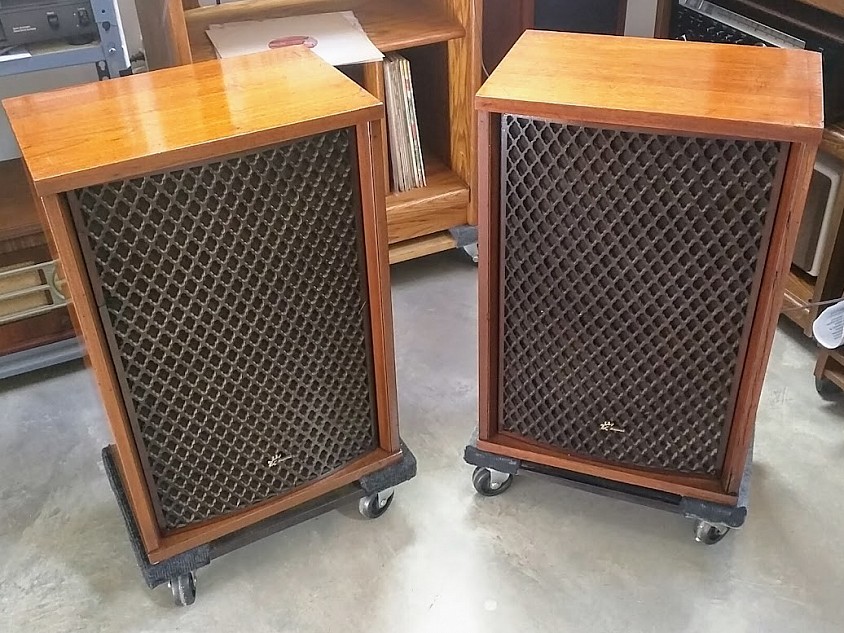
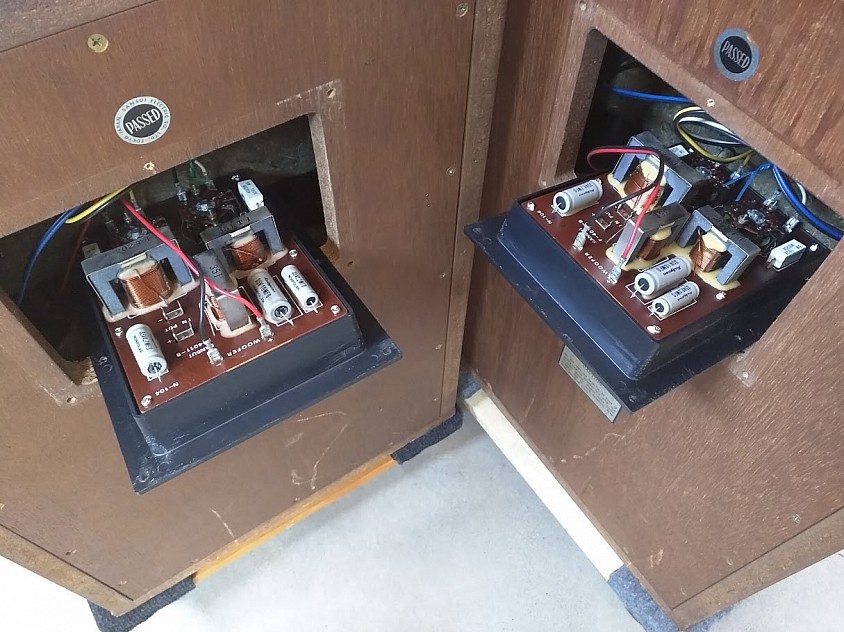
In absolutely pristine cosmetic condition, 100% all original components and fully functional, this pair of Sansui SP-2500 were obtained from the original owner. It's obvious (when seen in person) they have been extremely well taken care of over the last 50 years. All they really needed was a chemical treatment of deoxit for the attenuators (normally called tone controls) located in the rear compartments of the enclosures (see photo above). We gave them additional light sanding and refinishing to the gorgeous walnut cabinets.
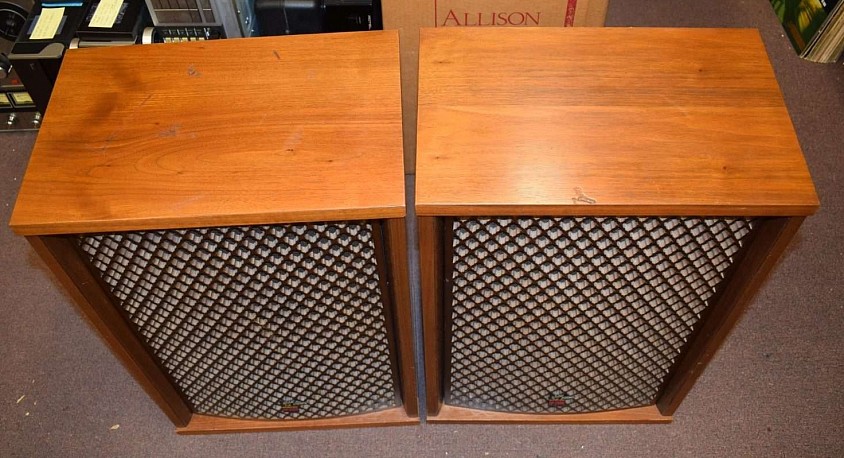
Originally introduced between the late 60's and early 70's, the SP-2500s (and most of the SP-xxxx series) are the most well built Sansui speakers of that vintage era. With their famous *Mikuni grills and reputation, these are regarded by many as the best model of this range from Sansui. The lattice grills were hand-built out of real timberwood and walnut veneer with a light fabric backing. Rather than have to deal with screws on the grill frames, we replaced them with velcro for ease of removal.
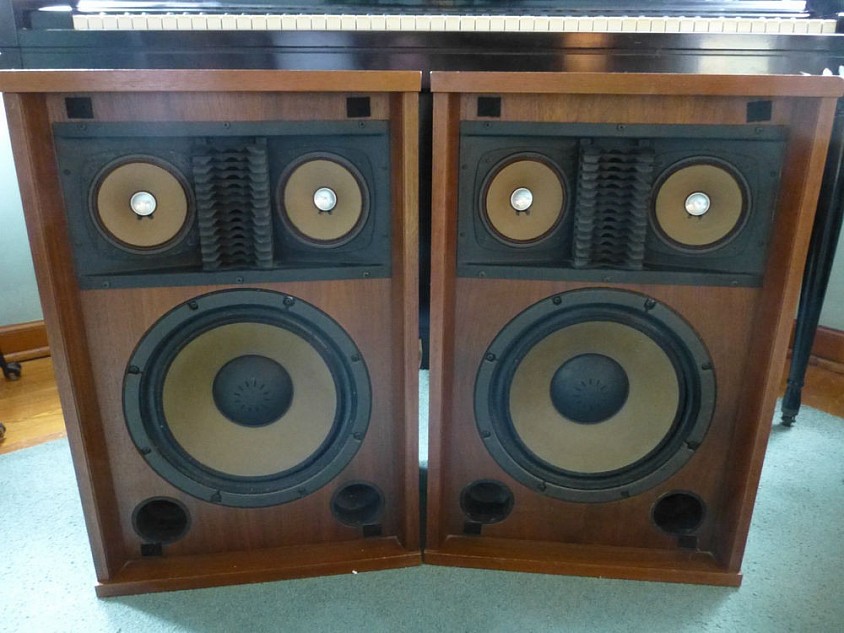
The SP-2500 is a 3-way, 5 driver system with each cabinet containing one 12" woofer, twin 5" mids and twin horn super-tweeters. As you can see from the photos, we always open up the crossovers (on higher end units) to check the caps and treat the attenuators. After driving these with a minimum of 35 watts up to a maximum of 75 watts per channel receiver, they perform flawlessly and present a very satisfying soundstage.
On the baffles, the unique design of these mint condition Sansui W-113 woofers feature precisely perforated dust caps, inverted half-roll treated cloth surrounds and enormous magnets.
It should be noted that the little twin horn tweeters are hiding behind diffusers that tend to push their sound downward a bit. Therefore, as we always recommend for large and heavy speakers, angled floor stands are best (also to enhance the bass as well)
At a heavy 50 lbs each, the real walnut veneer cabinets are nearly as perfect as the day they came out of the box.
*As some of you may already know, Sansui was one of the earliest to design and implement the famous "Mikuni" grills. These grills were all individually hand-made (in Japan) and many companies copied the idea with their own different styles of lattice grills with fabric backing.
Basic specs:
Frequency Response: 35Hz to 20kHz
Power Handling: 80W
Crossover Frequency: 700, 6500Hz
Impedance: 8Ω
Sensitivity: 98dB
Dimensions: 10.8"D x 25"H x 16.7"W
Weight: 50 lbs each
++++++++++++++++++++++++++++
++++++++++++++++++++++++++++
KLH Model 23
KLH Model 23
KLH Model 23
KLH Model 23
KLH Model 23
('68-'71) $500 (stands not included)
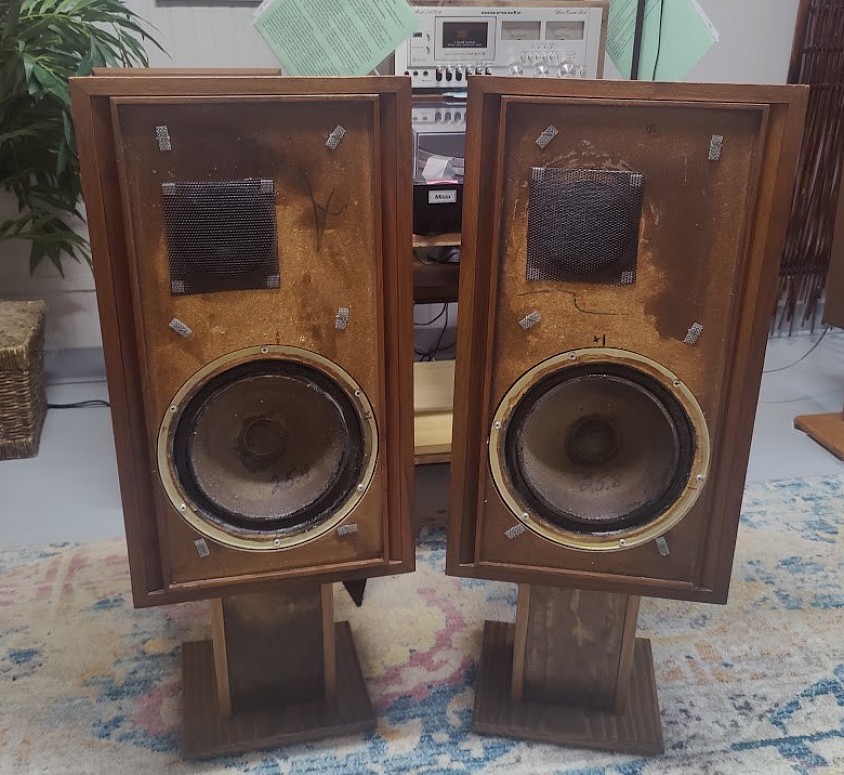
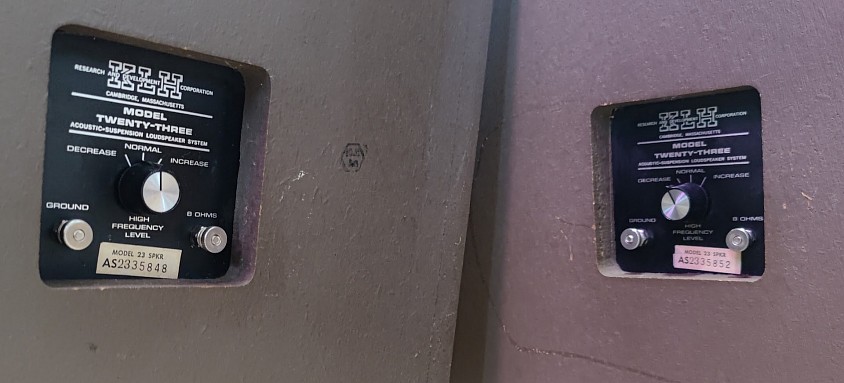
Most knowledgeable vintage speaker addicts would probably agree that when it comes to the best of the KLH "Classic" models, there are three models in an illustrious group of 7 models that stand out: the Model 5, Model 6 and Model 23.
NOTE: Please read the section below about the tweeters & woofers.
Bear in mind, the others that are considered classics (17, 28, 31 & 32) are excellent in their own right but...the 5, 6 & 23 garner most of the praise over the last half century.
It's been said that the Model 23 came to market in mid-'68 and was offered for only about three years. Not all that many were sold, maybe 20,000 pairs. That's a fairly low production number because something like 100,000 pairs of each model were sold with the models 6, 17, 20, 22 & 24.
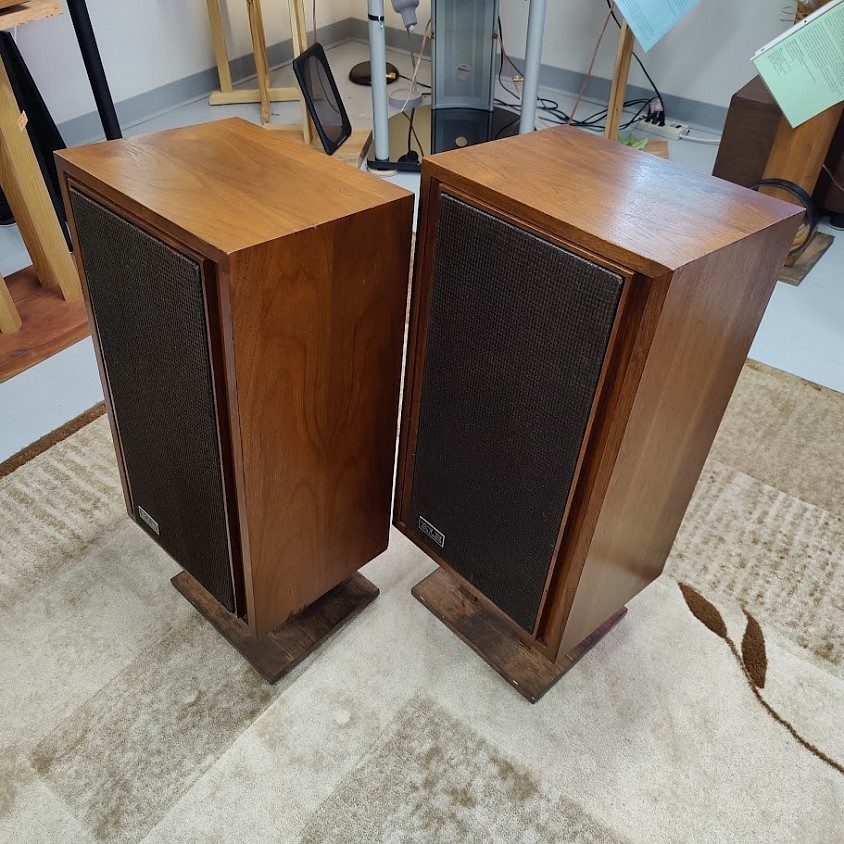
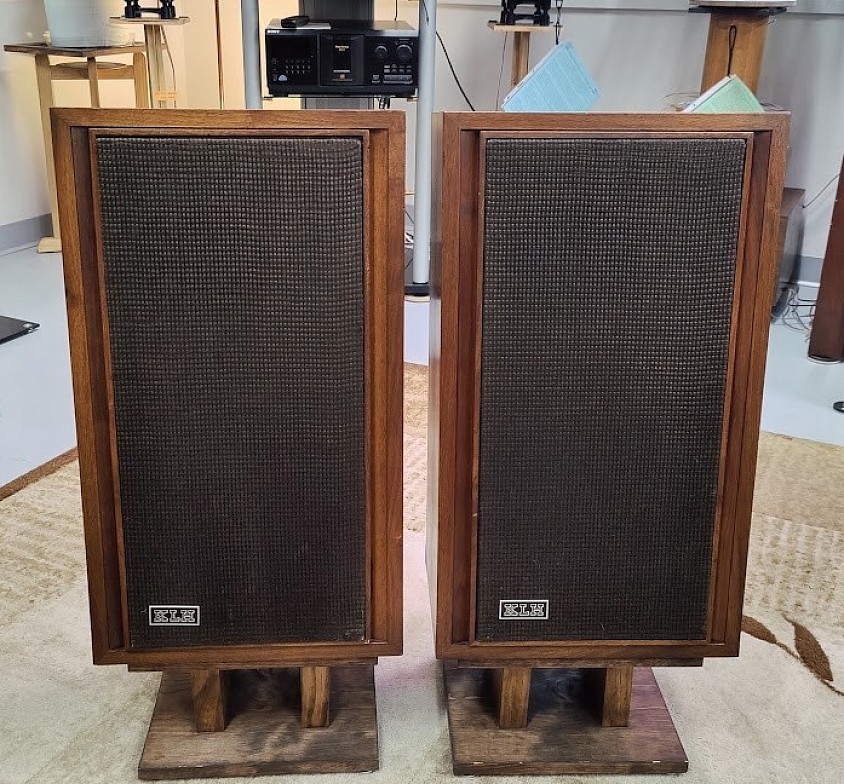
Fortunately, this pair of KLH Model 23 have been well cared for over the last 50+ years. They were opened up to check the crossovers and wiring. The original woofers have been lightly re-doped and sealed where needed. That was followed up by a careful light sanding and refinishing of the furniture-grade (and gorgeous) oiled real walnut veneer enclosures. The original grills are near perfect; their unique double-layer fabric just oozes that much sought after vintage quality and styling.
NOTE: About these beautiful cabinet designs...besides some serious bracing and stuffing inside, the outstandingly gorgeous framed front baffles are like works of art; especially when seen in person. The grill cloth itself is an acoustically transparent mix of brown and gold weave. They are easily removed thanks to the gentle velcro attachments.
About the tweeters (and woofers):
These original woofers in the Model 23 are identical to the Model 5 (and a few other models of the era): when they were first released in the late 60's, each enclosure contained one 12" acoustic suspension woofer and one 1.75" tweeter (with the recognizable protective metal screen and square magnet structure of early KLH tweeters).
Unfortunately, the original tweeters were long gone on this pair when we obtained them. Instead, they contained a pair of crappy 8 ohm tweeters. These tweeters were removed because this was unacceptable for a couple of reasons: the original tweeters were 4 ohm and of much higher quality. Thus began the search for tweeters.
Unfortunately, today (some 50+ years later), it's nearly impossible to find any of the replacements for the original tweeters in the Model 23 (and other similar models of the era). Even if you could find one, it would just be another 50+ year old tweeter that may or may not last very long.
So, what's the point of gambling with another original tweeter with an obviously limited lifespan?
Instead (after affirming their compatibility with the Model 23 specs) we tried several different models of both vintage and modern 4 ohm tweeters.
Settling on a matched pair of brand new Dayton Audio 1" neo soft dome 4 ohm tweeters was a no-brainer. These tweeters, with their "Waveguide" technology seemed a perfect match.
The result? An excellent soundstage and smooth transition at about 1500 Hz.
Even though it shares the same woofer as the Model 5, the basket, cone & voice coil are the same as the Model 6 but the magnet is much heavier than the Model 6 for two reasons: the larger cabinet and cones which were selected to be heavy. Looking at a model 5 or 23 cone you will see the weight in grams written on the cone, usually around 23-25 grams while the Model 6 cones weigh in around 18-20 grams. The larger cabinet and heavier cone equals a lower resonant point than the Model 6. The larger magnet is needed to maintain efficiency and transient response. The woofer from a 6 weighs about 5.5 lbs and those from a 5 or 23 are about 8 lbs. Perhaps that's why the bottom end (bass) is right up there with the famous Original Large Advent speaker (as it should be since *Henry Kloss had his fingers & brains tied up in all of them). No doubt best described as "very very satisfying", the overall sound of the Model 23 is just great!
Essential specs:
~8 ohms (nominal)
~85dB sensitivity
~Amps between 25 and 100+ watts per channel
~Dimensions: 26" H x 13.75" W x 11.5" D
~Weight: 50 lbs each
*About Henry Kloss and Victor Campos on the model 23...this would have been late 1967 or early 1968 because Kloss left KLH sometime around that time in. Campos did some great work for KLH. Another character who worked at KLH in 1966 was Win Burhoe of EPI fame. KLH really knew how to make speaker drivers, especially woofers. They were among the very few companies that wound their own voice coils, fabricated their cones, etc., they were very vertically integrated.
*About Henry Kloss...
Henry Kloss, whose prolific hi-fi design and manufacturing career spanned a half century, died of a subdural hematoma on January 31, 2002, three weeks before his 73rd birthday. Habitually clothed in khaki trousers and oxford cloth shirts, their button-down collars unbuttoned and sleeves rolled, Kloss (pronounced with a long o, to rhyme with "close") looked like someone familiar with tools. Indeed he was. As a boy, he was able to add rooms and bath fixtures to the Pennsylvania cabin he shared with his mother and two sisters.
After entering MIT in 1948, Kloss worked part-time for a contractor and bought woodworking tools to make furniture for his basement apartment. Instead, he used them to turn out enclosures for a speaker system an MIT professor and his student had designed. Henry dropped out of MIT after being drafted. Stationed in New Jersey, he took a New York University night course in high fidelity taught by Edgar Villchur, who had conceived a radically new type of loudspeaker.
In 1954, Villchur and Kloss founded Acoustic Research to develop and produce it. Henry provided the facility, a cabinet and speaker-assembly shop he was already operating in a Harvard Square loft. Two other partners, Malcolm Low and J. Anton Hofmann, son of the great pianist Josef Hofmann, supplied $5000 in capital. That led to the AR-1, the world's first acoustic-suspension loudspeaker system, with its relatively small enclosure and proportionally prodigious bass. But Villchur remained home in Woodstock, New York, while Kloss ran the Massachusetts factory. That caused friction, leading Kloss, Low and Hofmann to break away and put their initials on a new firm. In 1957, they founded KLH.
In 1967, after producing more landmarks, including the KLH Model Six speaker, the fine-sounding Model Eight radio, and a hi-fi system in a suitcase designated Model Eleven, Henry started Advent to work on projection television. The speakers he built to fund that effort quickly became best-sellers. Henry Kloss embraced innovation. He was quick to employ the transistor, which was crucial to the KLH Eleven's portability, and he ingeniously combined previously unrelated concepts with two Advent firsts: a cassette deck featuring Dolby noise reduction (which he had prodded Ray Dolby to adapt for consumers) and chromium dioxide cassettes. That synergy made the medium truly music worthy. Yet Kloss was genuinely modest about such achievements. "Some of the particular things I have done...could have and should have been done before," he once told me.
After leaving Advent, Henry started Kloss Video and, in 1988, co-founded Cambridge SoundWorks, for which he designed some three dozen products. His newest radios, marketed by Tivoli Audio, have the simple, signature look of his KLH models, even down to their planetary dials. Kloss, informed by his own muse and unimpressed by fashion, created boldly original, straightforward, utilitarian products that lowered the price of performance. Longevity was another criterion, in what he built and what he bought. When he retired his second Checker automobile after 14 years of use, Henry vowed to drive his new Mercedes diesel for 20. He owned it to the end, 17 years in all. For the many people who so admired Henry Kloss, that wasn't long enough.
+++++++++++++++++++++++++++
+++++++++++++++++++++++++++
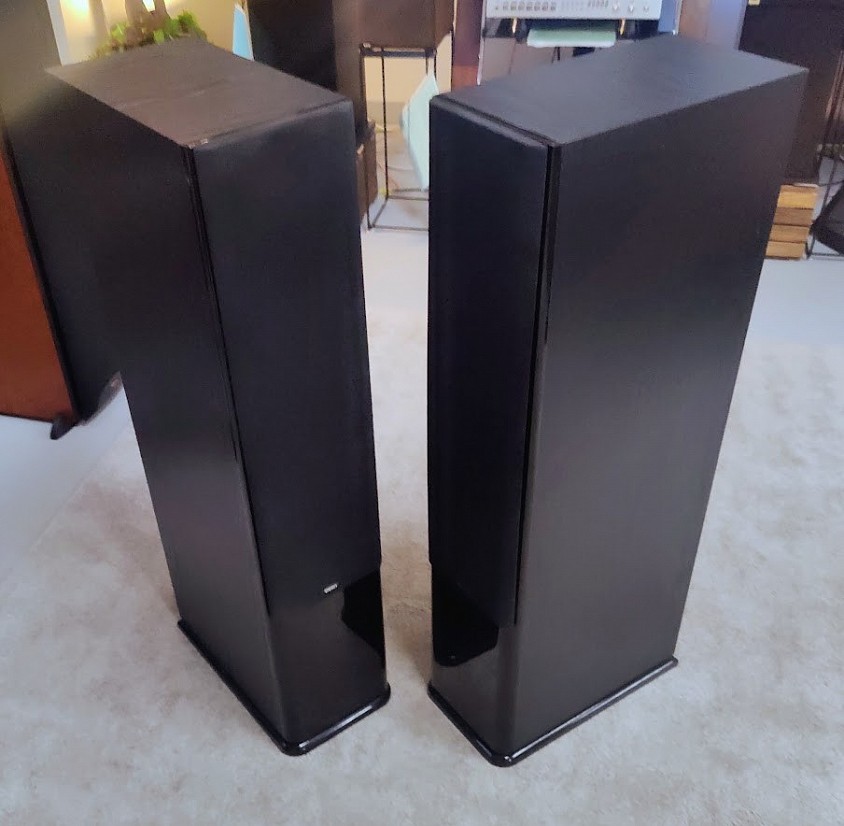
Energy C-Series 500B-1
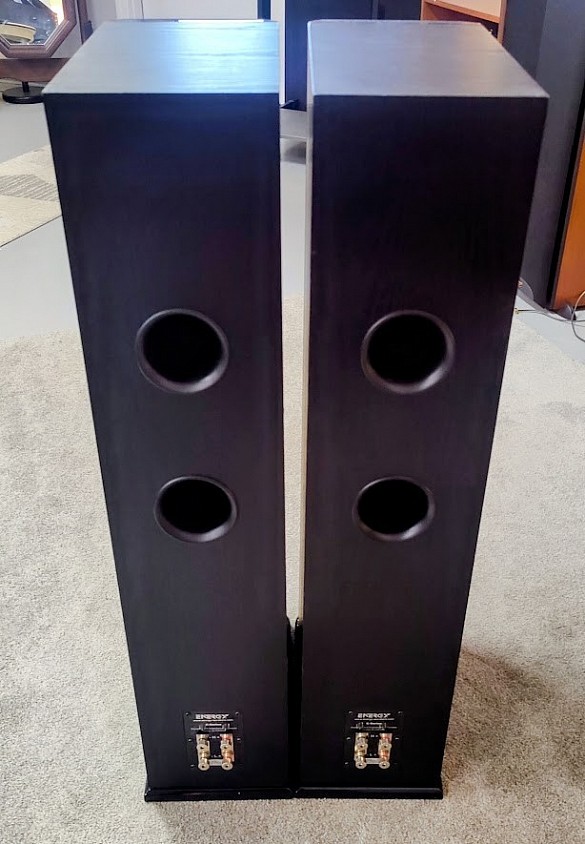
Energy C-Series 500B-1
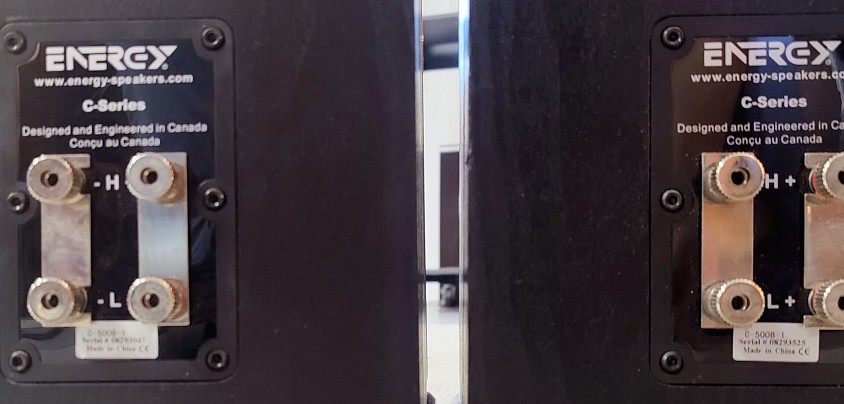
Energy C-Series 500B-1
Energy C-Series 500B-1
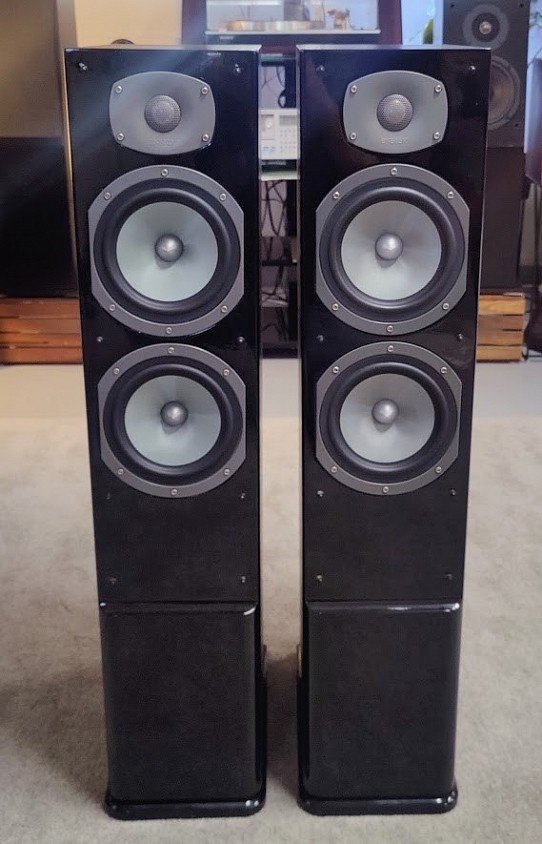
Energy C-Series 500B-1
('06-'11) $500
In excellent cosmetic and operating condition, this pair of Energy C-Series 500b-1, were obtained from the original owner who bought them new in 2010 for $750 (pair).
This model was part of the larger Energy Connoisseur C series, and they are a 2-way bass reflex design featuring twin rear bass ports, dual 6.5" composite fiberglass woofers and 1" aluminum dome tweeter.
The C-Series C-500 is best known for its capabilty to produce great extension, slam and impact, with virtually no distortion for huge, clean audio. Essentially, the bottom end coming out of these speakers is nothing short of astounding and extremely satisfying.
Specs:
System Type: Bass Reflex, Rear Vented
Frequency Response: 35Hz-20kHz +/- 3 dB
Recommended Amplifier Power up to 150 watts
Components: Chambered 1″ Aluminum Dome, Dual 6-1/2″ Composite Fiberglass cones
Impedance 8 ohms nominal; Minimum Impedance: 4 ohms,
Sensitivity (anechoic) 91dB, Sensitivity (2 speakers in a typical room) 94dB
Crossover Point 1.2kHz and 2.5kHz
Overall Dimensions: 8"W x 37.5″H x 14.5"D
Weight: 44 lbs each
About Energy...
Currently owned and operated by the Klipsch Group inc., Energy has been a leader in audio research and development as well as in the engineering and manufacturing of speakers since 1973. They took what they learned from their involvement with some of the earliest Canadian studies on psychoacoustics, and proceeded to achieve pure, accurate sound reproduction in all their Energy speakers through three vital performance principles: flat on-axis frequency response with wide bandwidth; wide, constant dispersion; and low distortion and resonance.
Worldwide Distribution:
Klipsch Group, Inc. oversees business operations for the Energy®, Mirage®, Klipsch® and Jamo® speaker brands and distribution companies worldwide. This technology powerhouse is focused on leveraging its highly acclaimed product lines to offer a unique and powerful single supply source for its retailers, distributors and contractors globally.
++++++++++++++++++++++++++++
++++++++++++++++++++++++++++