
Featured RECEIVERS
HH Scott 350R
HH Scott 350R
HH Scott 350R
HH Scott 350R
HH Scott 350R
(late 70's) $450 (pristine)
40 WPC @ 8 ohms / 60 WPC @ 4 ohms
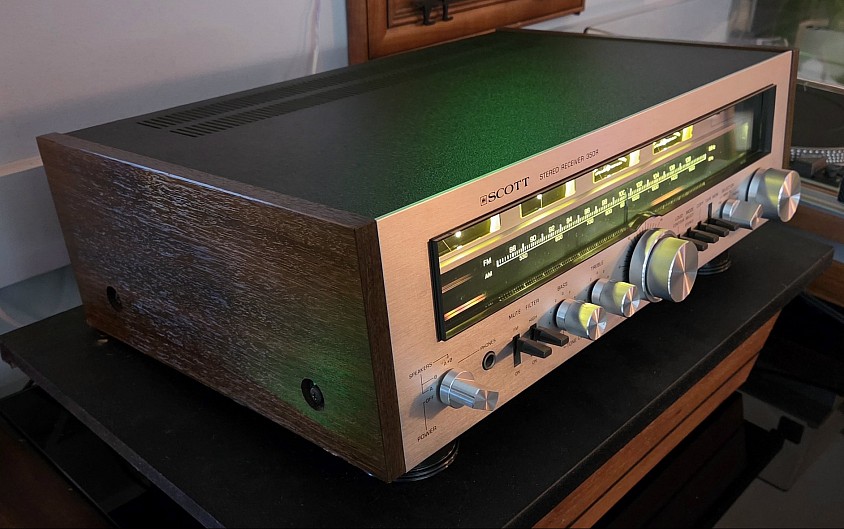
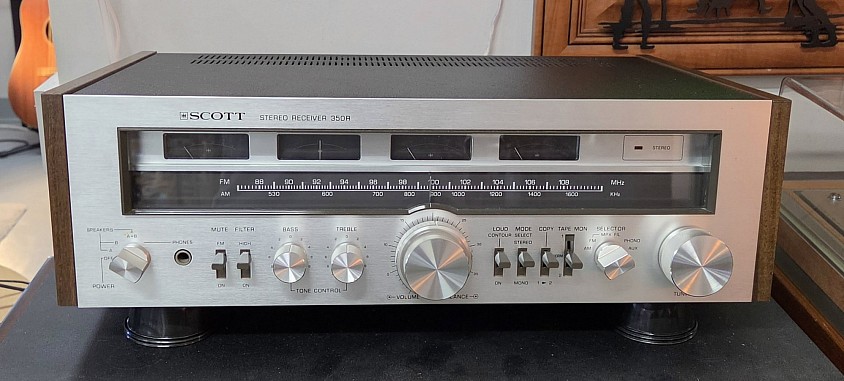
In pristine cosmetic condition, fully bench serviced, fully tested and fully operational, this HH Scott 350R receiver is one our personal favorite models. It has that certain "look"...it's beautiful and very heavy considering its size.The original MSRP was a whopping $400 in 1979 (with inflation, that's about $1850 today). That was more money than the competing 40 watters at the time. Coincidentally, we've priced it exactly the same as it was when new.
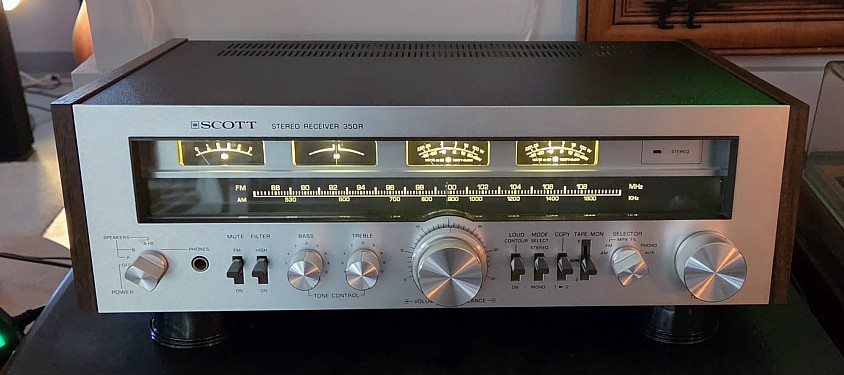
So...about its 40 watts per channel into 8 ohms? This beauty has tons of headroom and lab tests showed the onset of clipping at 62 watts per channel. Best described as a heavy weight with mid-size dimensions, excellent interior build quality and, of course, those four beautiful meters. Those four meters were another reason the 350R set itself apart from most of the rest of the competition; most of the others had 2 basic FM meters. Gotta love those meters!
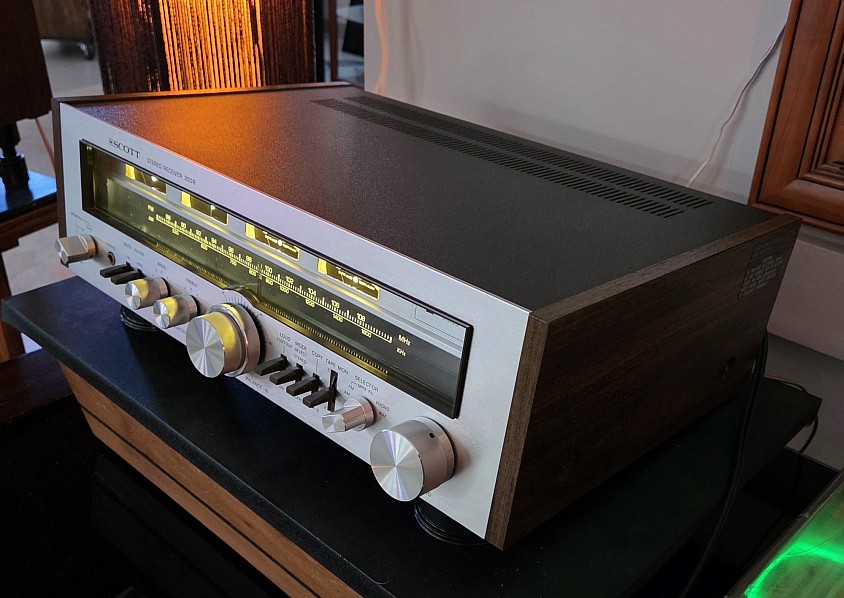
The first thing that grabs you is the gorgeous design...huge aluminum detented tuning and volume knobs, silver flip switches, aluminum block selector knobs, and as mentioned above, the dual front-panel meters displaying estimated power output levels for the left and right channels plus dual meters for AM/FM signal strength.
Lastly, it features that beautiful faceplate design with complementary real timberwood side panels.
As a bonus, we installed all brand new cool running LEDs that cast the right look into the black background meters...stunning. Replacing the lamps on this receiver is very labor intensive; desoldering the old burned out (tiny) incandescent lamps and then resoldering the new LEDs is a literal pain in the butt. Like all the small details involved with restoring vintage gear, they have to be fixed right!
Some of its features include:
+DC configuration OCL power amp section with crazy low distortion (0.06%) +Four gang FM tuner section
+All silicon dual-gate MOSFETs for wide, low noise signal and superior FM reception that pulls in distant stations with ease...even without an antenna!+Four meters: dual wide range power meters calibrated in watts plus signal strength meter and center channel tuning meter
As one of the most elusive of the late 70's receivers from HH Scott, the 350R is a definite, high value collector quality piece of vintage history from the "Golden Age of HiFi".
Specs:
Power: 40 WPC (minimum) @ 8 ohms / 60 WPC @ 4 ohms
THD: 0.06% from 20-20,000 Hz
Dimensions: 18"W x 13"D x 5.5"HWeight: 22 lbs
About H.H. Scott...
Hermon Hosmer Scott founded H.H. Scott in 1947. The prefix H.H. was to differentiate his fledgling company from E. H. Scott, The Scott Radio Company of Chicago, and makers of “The Rolls Royce” of AM radios. Although H.H. is different from E.H., it was similar enough to make one wonder if perhaps Scott, always the shrewd businessman, hoped that some of E.H. Scotts’ reputation for quality might, by association, rub off onto his new company?
Scott held many patents and was instrumental in the birth and development of high fidelity sound equipment. HH Scott, the famous name by which he and his firm were so widely known, became one of the top two respected names in consumer high fidelity (and later stereo), the other also bearing its founder's name, the very famous Fisher Radio.
Scotts’ first product was “The Dynaural Noise Suppressor”. This product, aimed primarily at the professional broadcast market, made it possible, for the first time, to play records on the radio. Prior to its’ introduction, 78 rpm records were considered too full of pops and ticks to warrant airplay. Scotts’ first product, while a technical step forward, changed the face of American Radio in a way that, in retrospect, cannot necessarily be considered positive. Overnight, all those wonderful live radio programs were replaced with recorded music. Chalk up another victory for technology over live music. Scott continued making a Dynaural Noise Suppressor through 1956, when the model 114A was finally discontinued.
Unlike Pioneer, Marantz, Yamaha, etc who had enormous marketing budgets, HH Scott had to rely on relatively little advertising. Word of mouth and shootout test results helped Scott to carve their own niche in a very crowded, very competitive market during the '60's, 70's and beyond. Scott was one of those highly respected companies in HiFi and, in the audiophile community, they were well known regardless of not having tons of money for advertising.
Scott remained independent until 1973, when it was folded into its European distributor, Electro Audio Dynamics. Although Scott continued with their great designs (especially with their stereo receivers) and remained strong throughout the 70's, this began the final chapter in a gradual decline. The transistor age, and the entry of foreign products into the American audio marketplace was the beginning of the end for Scott, Fisher, and most of the American manufacturers. Rather than aim for the smaller upscale market, as did Macintosh, Scott tried to beat the Japanese at their own game. Scott Lost.
As the market got really crazy towards the end of the 70's and into the 80's, Scott focused on exports to stay in the market. Sadly, as in the case of so many other great names in HiFi, they were eventually acquired by yet another company (Emerson Radio bought Scott in 1985), leading to its eventual disappearance.
++++++++++++++++++++++++++++
++++++++++++++++++++++++++++
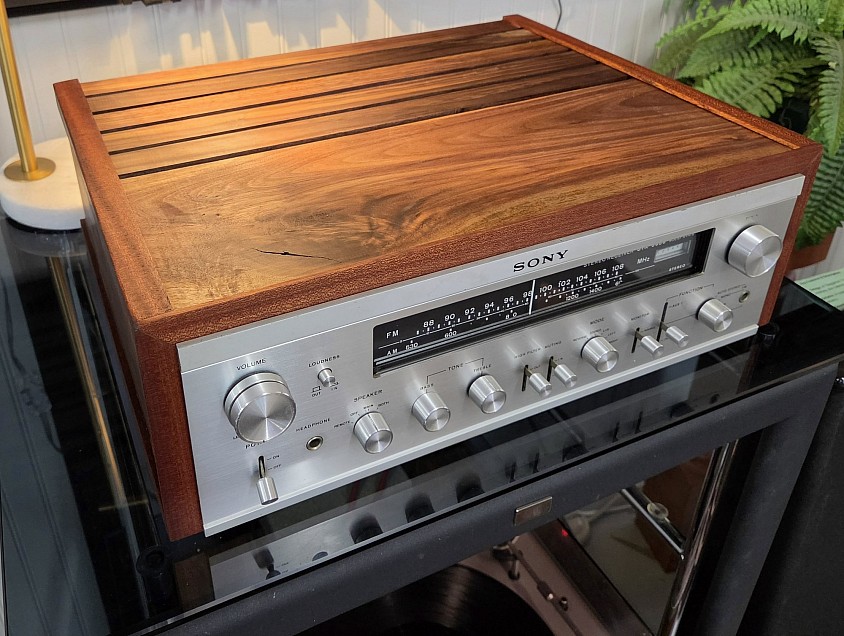
Sony STR-6050 (shown w/ optional walnut cover)
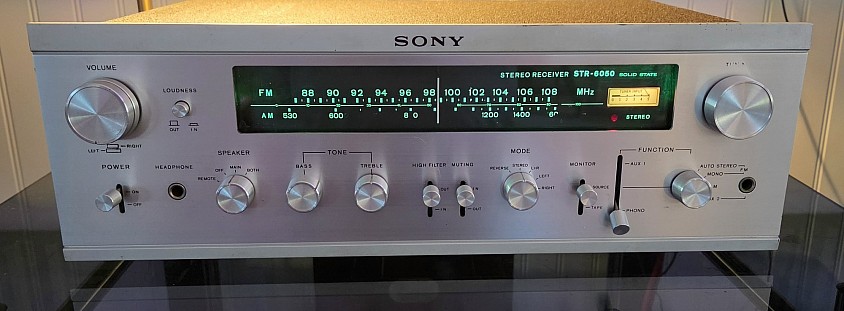
Sony STR-6050
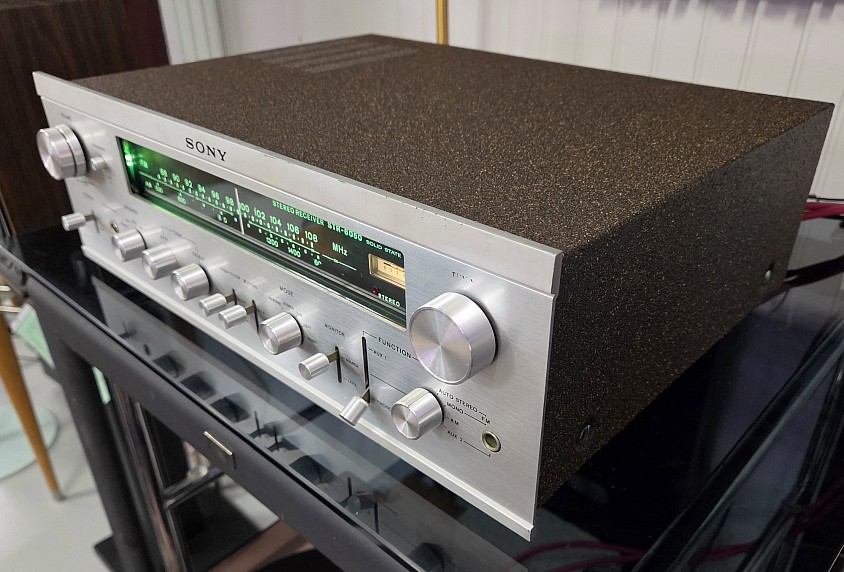
Sony STR-6050 (with refinished factory metal case)
Sony STR-6050
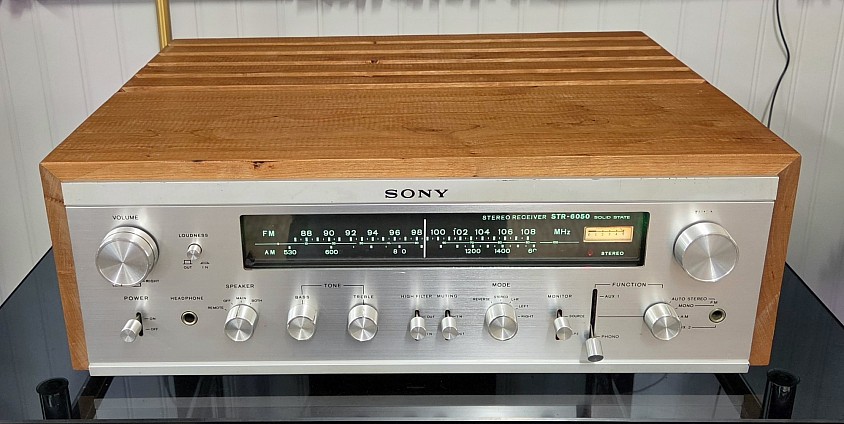
Sony STR-6050 (shown with optional cherry-wood cover)
('68-'70) 30 WPC $350
This beautiful, classic, vintage Sony STR-6050 stereo receiver was produced right around the beginning of the "Golden Age of HiFi" (best defined as the period from 1970- 1980). Those who are familiar with the Sony receivers of this era will remember the distinctive "Emerald Green" lighting across the radio glass.
Like all our vintage gear, it has been disassembled for intensive bench servicing (including the typical chemical treatment for the pots & switches) all the boards have been checked for issues including solder breaks, wiring where necessary, voltage, replacing specific caps, etc. All new lamps have been installed. Final testing was done to make sure every input, output, switch, etc is fully functional.
It features 30 watts per/channel and a heavy dose of incredible engineering. Exactly what you'd expect in a Sony electronics product from this era. As is often said, don't let the watts fool you; this Sony has no problem driving efficient speakers regardless of their size. Although the service manual states that the STR-6050 can drive 4-ohm speakers, we'd advise caution about certain 4 ohm loads since the STR-6050 is a "cap-coupled" design. Simply put, at 30 watts per channel, there can sometimes be a noticeable difference in bass output when driving specific 4 ohm loads.
The heavy aluminum faceplate design features the use of solid switches with their hefty chrome caps and distinctive knobs particular to Sony. It also has real glass with white silkscreen lettering on the backside of the glass
The factory metal case has been upgraded with a thick coating of textured stone mineral brown; truly unique and beautiful!
As shown in the photos, samples of our custom built 1/2" thick covers are also available in cherrywood / walnut / rosewood, etc with prices starting at $250 and up (depending on choice of wood) as an option.
Basic specs:
Power output: 30 watts per channel into 8Ω (stereo)
Frequency response: 30Hz to 50kHz
THD: 0.2%
Speaker load impedance: 4Ω to 16Ω
Dimensions: 17.25"W x 14"D x 6"H
Weight: 21 lbs
++++++++++++++++++++++++++
++++++++++++++++++++++++++
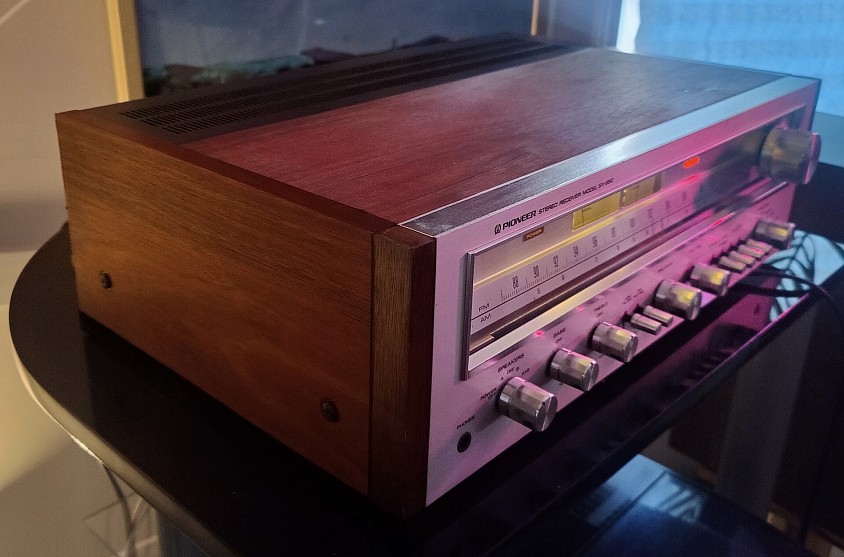
Pioneer SX-650
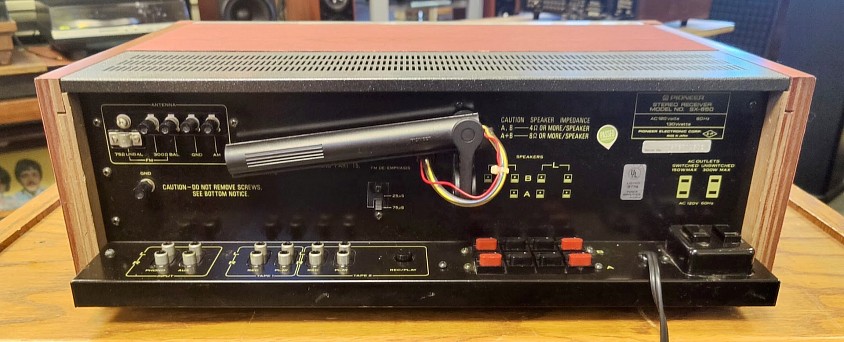
Pioneer SX-650
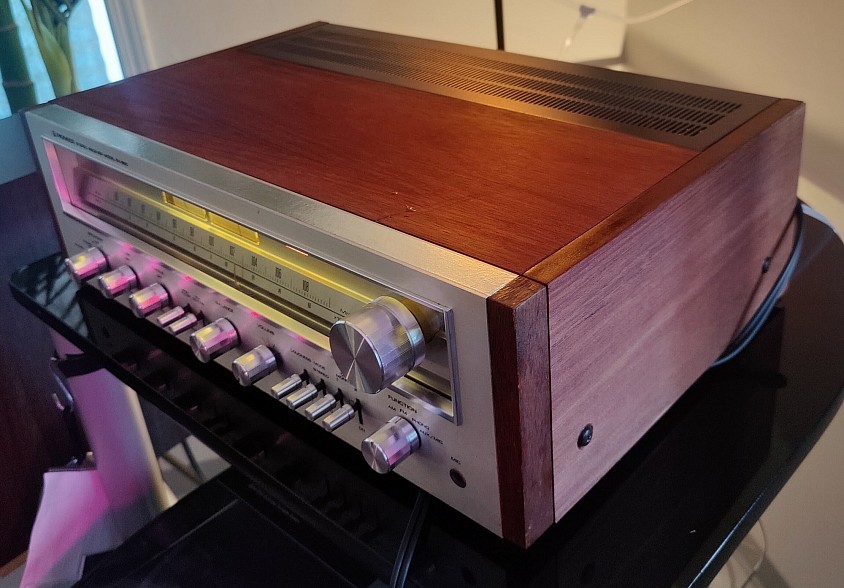
Pioneer SX-650
Pioneer SX-650
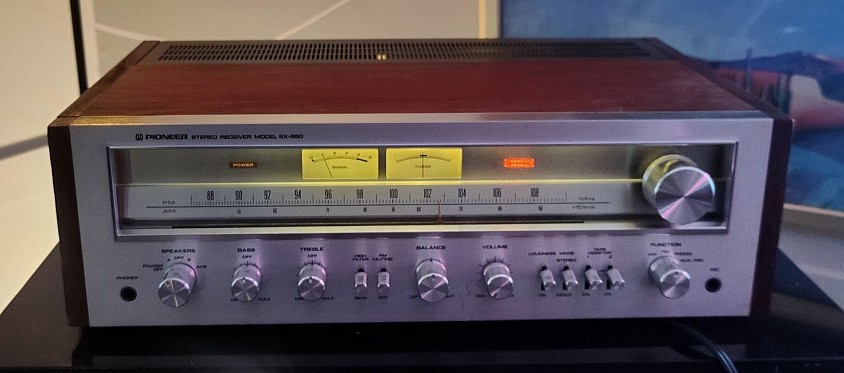
Pioneer SX-650
('76-'78) 35 WPC $475
In excellent cosmetic condition, fully bench serviced and fully operational, this Pioneer SX-650 is a pure example of some of the best Japanese technology available in the middle of the extremely competitive '70's. The SX-650 is surprisingly hefty at about 30 lbs which is a testament to its solid build quality and massive transformer.
Service:
This unit was completely disassembled for a thorough servicing. All pots, switches and boards have been meticulously cleaned and chemically treated wherever needed. The *cover was stripped of the deteriorating (and nasty) fake walnut film and completely redone with real walnut veneer on the top and sides. All new "cool white" LEDs were installed. Every input, output, switch and lamp are functioning perfectly.
Like all the SX-xx50 Series, this receiver has the very popular styling and great build quality from Pioneer .
*NOTE: If there were any complaints about the SX-xx50 series it was the cheap vinyl covering over parts of the case. It would almost always peel off after a while. As mentioned above we tackled that issue by stripping off the peeling vinyl and replacing it with real walnut veneer.
Pioneer had buckets of cash invested in their design and marketing departments, more than enough to push their brand into so many different media that practically anybody with a set of ears knew who they were. The SX-650 was the mid-level unit in the crazy popular receiver series that were (by near unanimous acclaim) the best '70's receiver series for Pioneer.
The Pioneer SX-650 was one of the classic mid-range receivers offered by Pioneer in the mid 70's. It has the classic silver face styling of Pioneer's 50 series which, when coupled with its custom wood case, makes for an exceptionally clean and stylish looking receiver. It was produced from '76-'77 and originally sold for around $300. It puts out 35 watts per channel @ 8 ohms and was designed and marketed for those with an average sized listening room and wanted great value for their money. The SX-650 didn't have too many frills but what it did, it did very well.
Among its many features are the weighted analog flywheel tuning, precision tuning meter, FM stereo signal indicator light, 3 gang tuning section, controls for bass, treble, and balance, loudness switch, stereo/mono switch, inputs for aux, tape deck, and phono.
The SX-650 was best described as a "high-medium powered stereo receiver with FET front end, PLL MPX, precision phono equalizer and plus/minus split power supply for OCL power amp."
The receiver has a massive transformer and weighs a ton for its size. Easily drives 2 pairs of speakers, turntable, aux, FM and 2 decks
Basic specs:
Power output: 35 watts per channel into 8Ω (stereo)
Frequency response: 10Hz to 50kHz
THD: 0.3%
Speaker load impedance: 4 ohms minimum
Dimensions: 19"W x 6"H x 14.6"D
Weight: 29 lbs
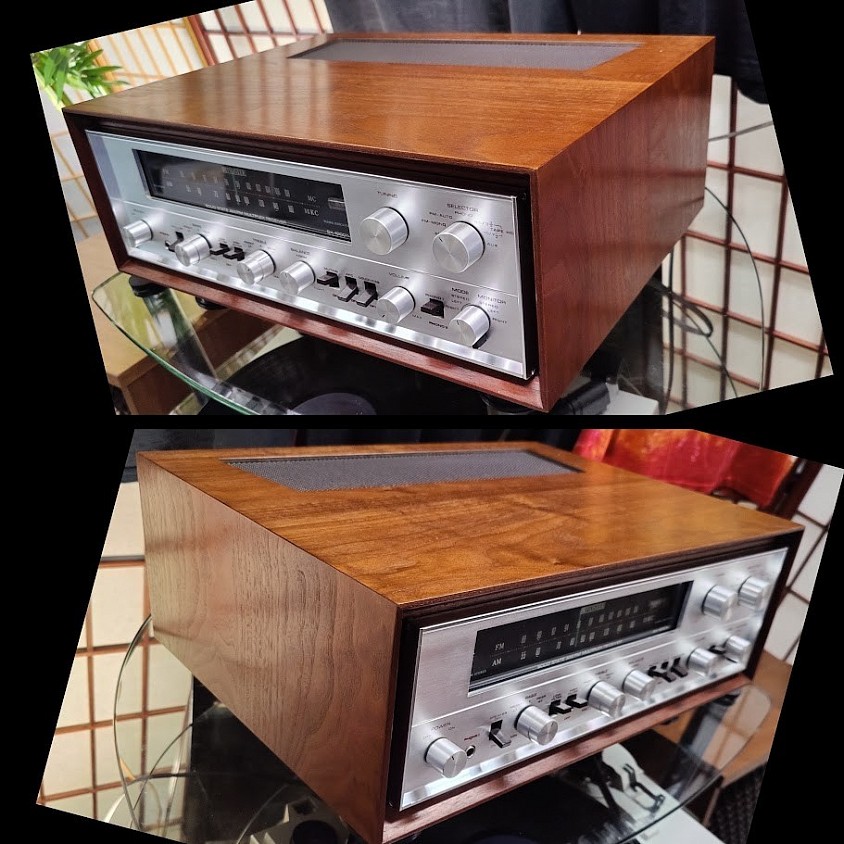
Pioneer SX-1000Ta
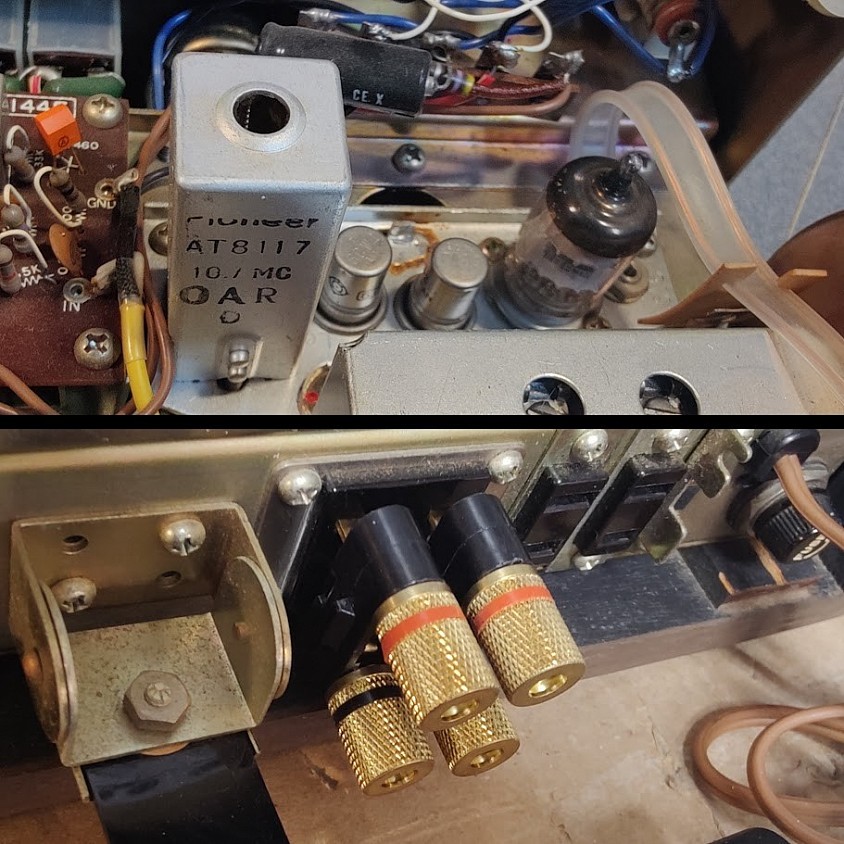
Pioneer SX-1000Ta (FM tube section / upgraded banana connection)
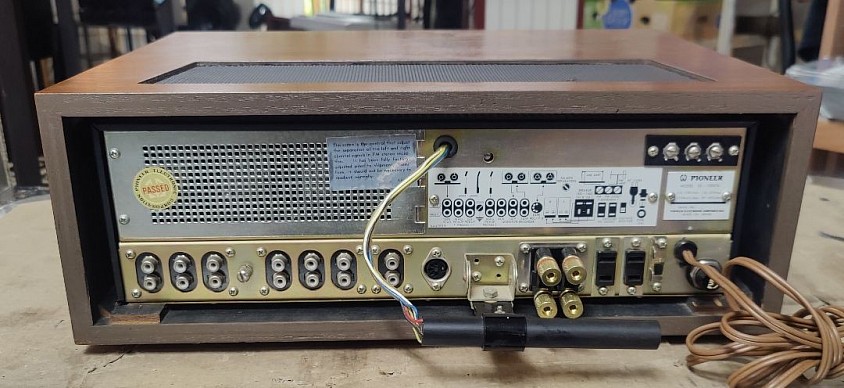
Pioneer SX-1000Ta
Pioneer SX-1000Ta
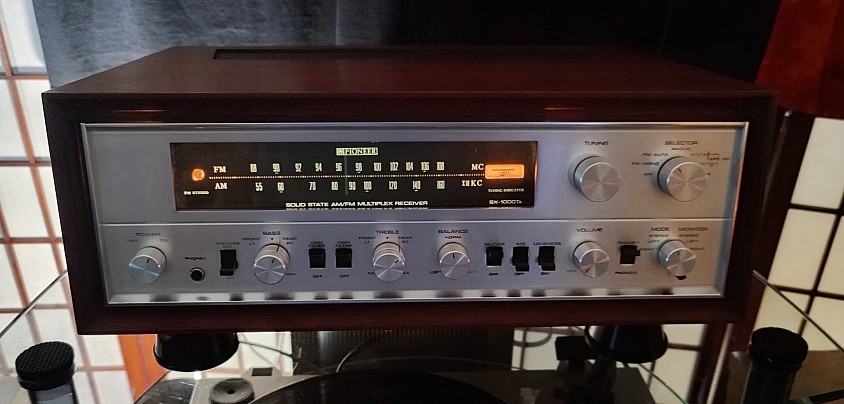
Pioneer SX-1000Ta
('71-'73) *50 WPC SOLD
Fully serviced and fully operational, this Pioneer SX-1000Ta "hybrid" receiver is in absolutely pristine cosmetic condition. If there's something else besides th e great build quality of this early Pioneer receiver...it has to be the gorgeous, pristine real walnut timberwood case; this completely defines the vintage design and style of that era.
Servicing:
As is routine, all pots/switches were given the usual deoxit "bath". It should be noted that the SX-1000Ta is a bit different from other "typical" receivers. Because it's "cap-coupled", adjusting the voltage (DC offset) is a little trickier; the center voltage was adjusted as per factory specs and then the bias was also adjusted. All the incandescent lamps are functional. All switches, inputs/outputs, etc are all functioning flawlessly. Despite its age, this wonderful receiver is still kickin' like it was new!
*NOTE: Regardless of the confusing online chatter about the SX-1000Ta's rated power, the Pioneer service manual clearly states 50 watts per channel (RMS). In the late 60's, early 70's that was a LOT of power!
There were a few different versions of this unit like the TW and TD (including one made by Pioneer for and badged as an Allied unit) but, if you're a collector of all finer things made by Pioneer, the SX-1000Ta might be the one to have.
Why?
The Pioneer SX-Ta features a hybrid design with a tube-based tuner section paired with a solid-state amplifier, while the later units were 100% solid state. The tuner section has one 6HA5 tube and two Hitachi 6CW4 Nuvistors plus an assortment of transistors.
NOTE: The 6HA5 and 6CW4 are both a high-mu triode design (high gain vacuum tubes with a high amplification factor) for use as a grounded-cathode, neutralized RF-amplifier tube. Some, like the 5CW4 are built in a tiny sealed metal-and-ceramic can with pin connections as opposed to the 6HA5 which has the traditional glass envelope and socket pins. The popularity of this receiver's design (especially for those that spent a lot of time listening to FM) indicates that the Pioneer engineers were successful in creating an unusual, yet highly effective and noise-free tuner section in the SX-Ta.
At the time in the early 70's, the features on the Ta (and TW, TD, etc) were groundbreaking for Pioneer. The decision was made to move away from tubes and explore solid-state across the board. However, as mentioned above, the engineers convinced the bean-counters to keep the FM section with current valve technology of the era.
It featured the typical FETs, ICs, MPX circuitry used at the time, along with muting and a high performance single-ended, push-pull output stage. Pioneer set the standard for mainstream consumer choice and forced the competition to play catch up.
On the rear, the SX-1000Ta has outputs for a turntable (one for MM and one for ceramic), aux, tape in/out and one pair of speakers.
NOTE: this unit would normally use those odd 2-pin Pioneer speaker plugs but, as a bonus, they have been upgraded with unique banana connections (see photos)
Specs:
Power output: 50 watts per channel (8 ohms)
Frequency response: 20Hz to 60kHz
THD: 0.5%
Impedance: 8 ohms minimum
Dimensions: 16"W x 6"H x 14"
Weight: 29 lbs (including case)
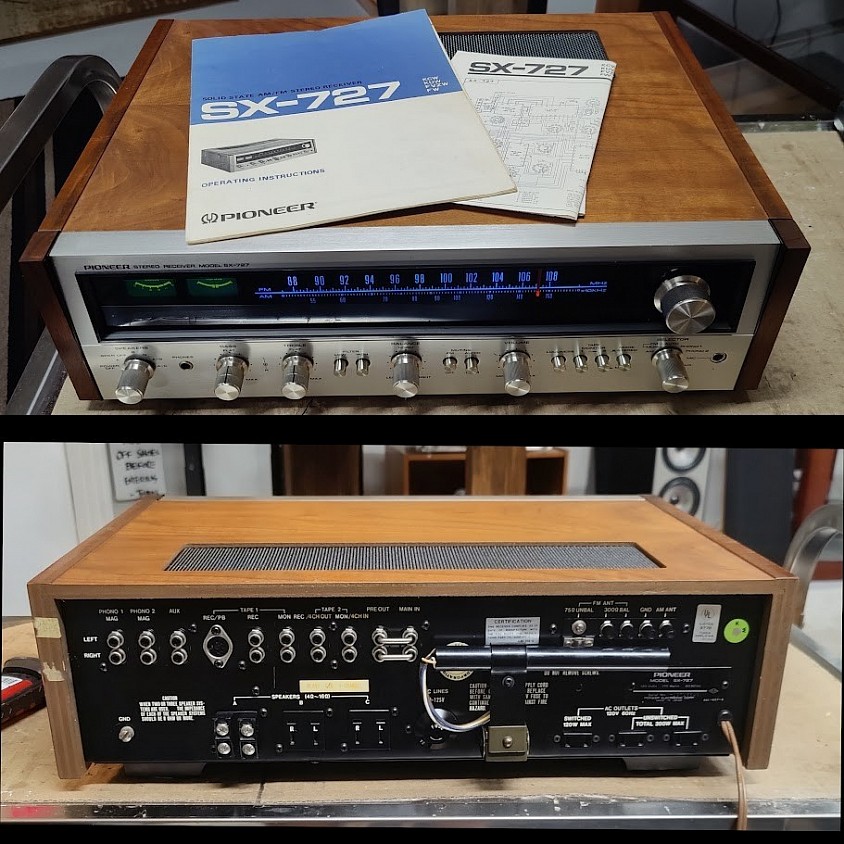
Pioneer SX-727
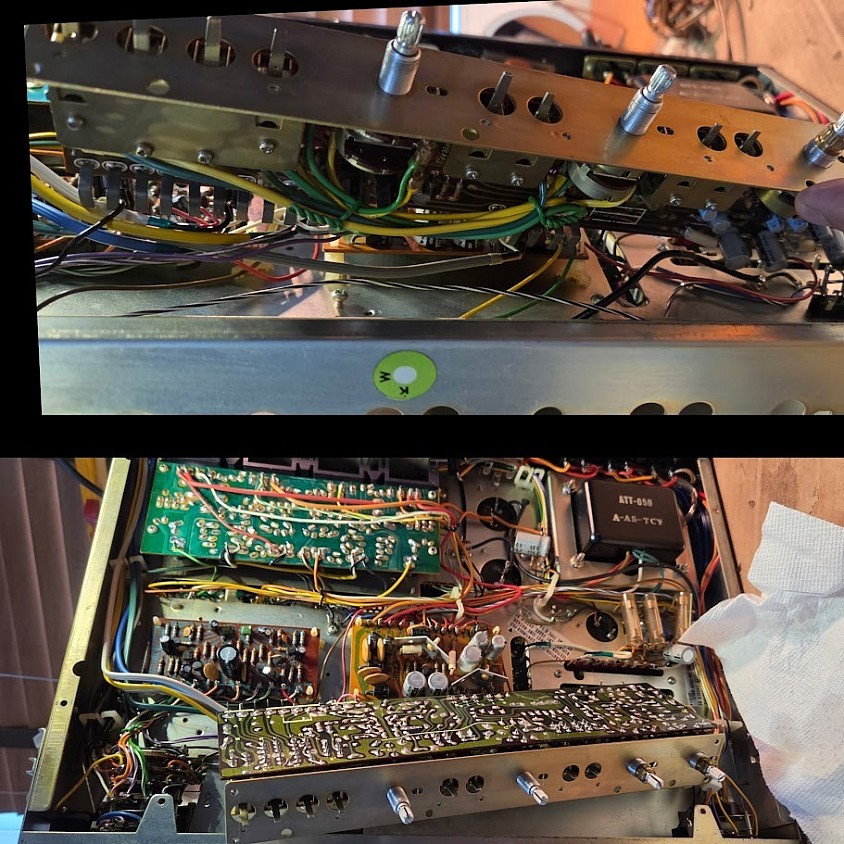
Pioneer SX-727 (bench nudies)
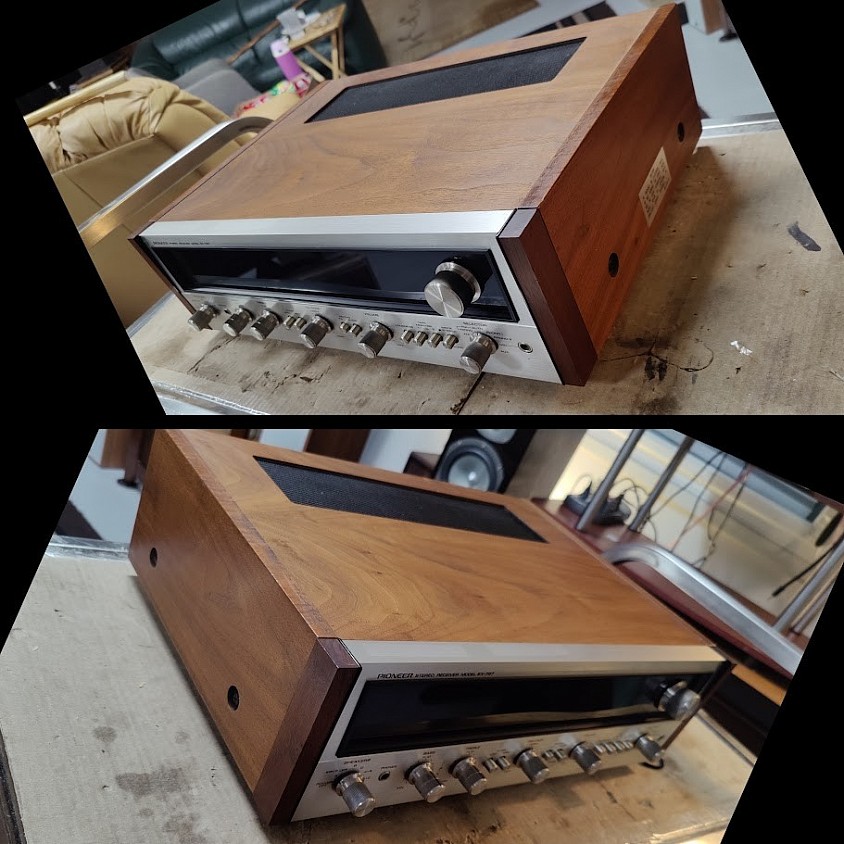
Pioneer SX-727
Pioneer SX-727
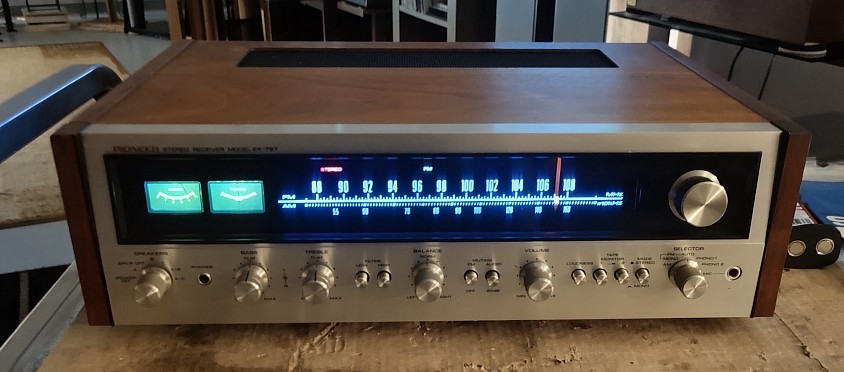
Pioneer SX-727
('72-'74) *37 WPC SOLD
Obtained locally from the original owner, this beautiful Pioneer SX-727 was part of the early-to-mid-70's lineup of highly respected stereo receivers. The SX-727 was flat-out called a "superb" receiver by almost all of the HiFi magazine reviews at the time of its release.
Included are the original manual and related documentation.
Cosmetics are pristine, the face-plate, lettering and walnut veneer case are pristine.
This receiver has been carefully bench serviced; almost a complete disassembly was required in order to properly get to all the boards, pots and switches (see photos). As usual, a chemical "bath" of Deoxit Gold & Fader Lube is always done. The main filter caps and output transistors were checked and found to be solid; well within original values. All new cool running LEDs were installed. All inputs and outputs were tested and are in perfect operating condition
Tech info:
Upon its release, the Pioneer SX-727 offered a degree of operating flexibility and electrical performance previously found only in some of the much more expensive receivers that were also available at the time. When looking at specs, the amplifiers of the SX-727 are rated at a minimum of 37 watts per channel (RMS into 8-ohms).
*However, when actually tested, the audio section of the SX-727 easily surpasses its ratings in every respect. The output clipped at almost 60 WPC (into 4 ohm) and almost 44 WPC into 8 ohms.
The phono gain is high (1.15 millivolts for a 10-watt output), yet the overload level is 100 millivolts— an excellent safety margin.
We discovered that by using a proper dipole 300 ohm flat lead antenna, the tuner section of the SX-727 was able to pull in stations with ease. It's a great tuner! Of course, your own location will determine just how well it performs at home.
With a combination of handsome styling and top-notch performance, the SX-727 spoke very well for Pioneer. It was clear that in its flexibility (and in many areas of its measured performance) it was arguably "better" than much of the competition at its price level. And, as a side note, as good as the SX-727 was (along with it's brethren in the lineup), the follow-up series of Pioneer's SX-xx50 Series, were also considered by many to be the pinnacle of their brand's vaunted lineup of stereo receivers during the '70's....often called the "Golden Age of HiFi".
Basic specs:
Power output: 37 watts per channel into 8Ω (stereo)
Frequency response: 7Hz to 80kHz
THD: 0.5%
Speaker load impedance: 4 ohms minimum
Dimensions: 19"W x 6"H x 15.5"D
Weight: 31 lbs
++++++++++++++++++++++++++
++++++++++++++++++++++++++
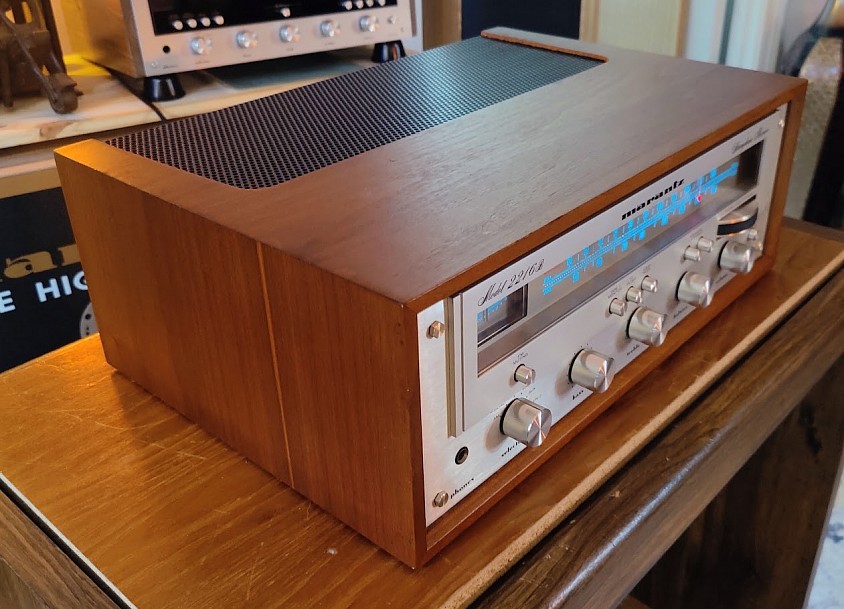
Marantz 2216B
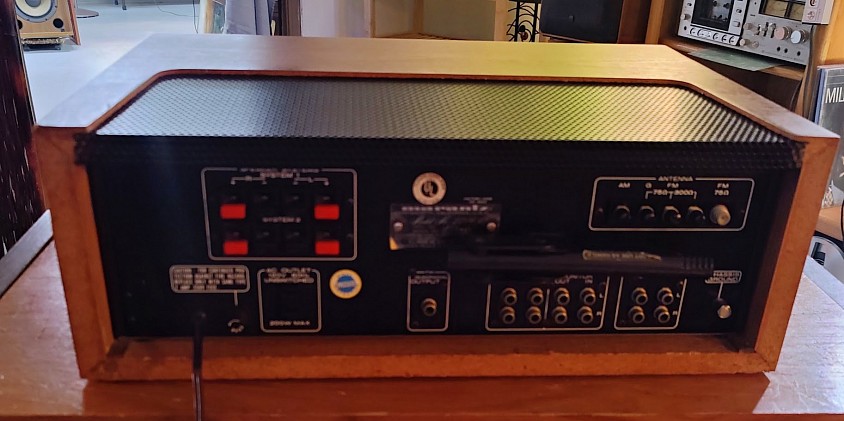
Marantz 2216B
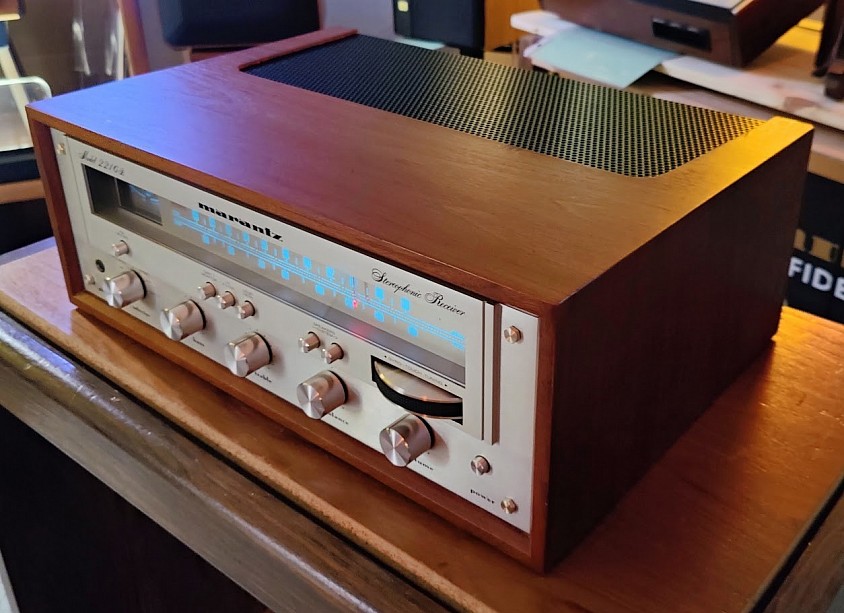
Marantz 2216B
Marantz 2216B
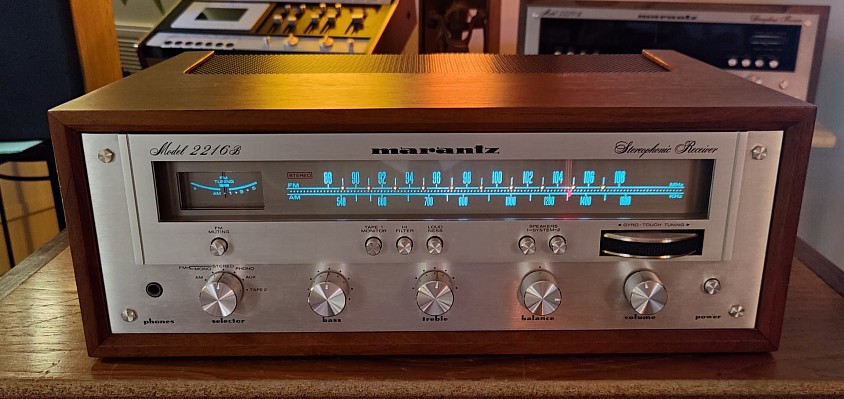
Marantz 2216B
(late 70's) 16 WPC $1100
In excellent cosmetic condition, fully bench serviced, fully tested and operating perfectly, this Marantz 2216B comes with the Marantz WC-116 (aka WC-22) walnut case. This lovely "baby" Marantz was part of a large collection of Marantz receivers; the owner of this collection also purchased this 2216B in 1978. Photos do not do it justice, it's absolutely pristine. The interior is spotless. All switches, inputs, outputs, etc are fully functional.
NOTE: Although this receiver is fully functional with absolutely no issues, it has not been recapped. Sometimes, a recap is not necessary but, to do so, would greatly enhance the life of the unit and substantially increase the value at the same time. For those reasons, we offer professional Marantz restoration services.
As are all of the 70's Marantz receivers, the 2216B is desirable simply because it’s part of the legendary 22xx series, and as such, has the beautiful, iconic Marantz sound and cosmetic appeal they are known for.
Although at 16 WPC, it might not appear to have enough power to drive really good speakers, remember...it simply depends upon the speaker's sensitivity and how loud you listen. There are LOTS of efficient speakers out there, most of which would match up with the 2216B in a most pleasing manner.
There is very little difference between the 2216B and the 2216 other than improved frequency response and minor cosmetic tweaks.
Services included:
~DC offset and bias adjusted to factory specs
~new indicator lamps
~replaced meter and dial lamps
~All switches and controls were given a chemical "bath" of Deoxit Gold
Basic specs:
Power output: 16 watts per channel into 8 ohms
Frequency response: 15Hz to 35kHz
THD: 0.15%
Dimensions: 18.5"W x 7"H x 14"D (including case)
Weight: 23 lbs (including case)
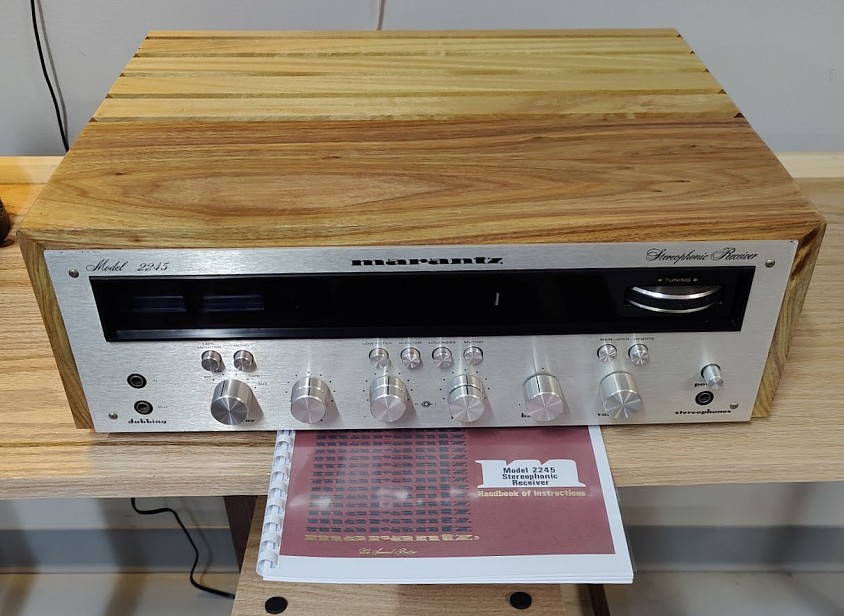
Marantz 2245
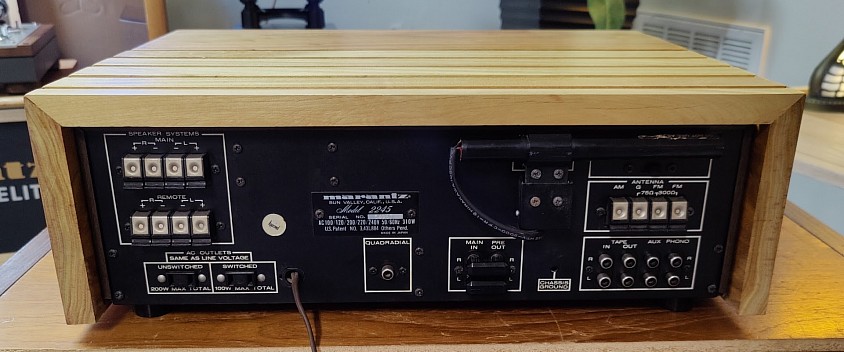
Marantz 2245
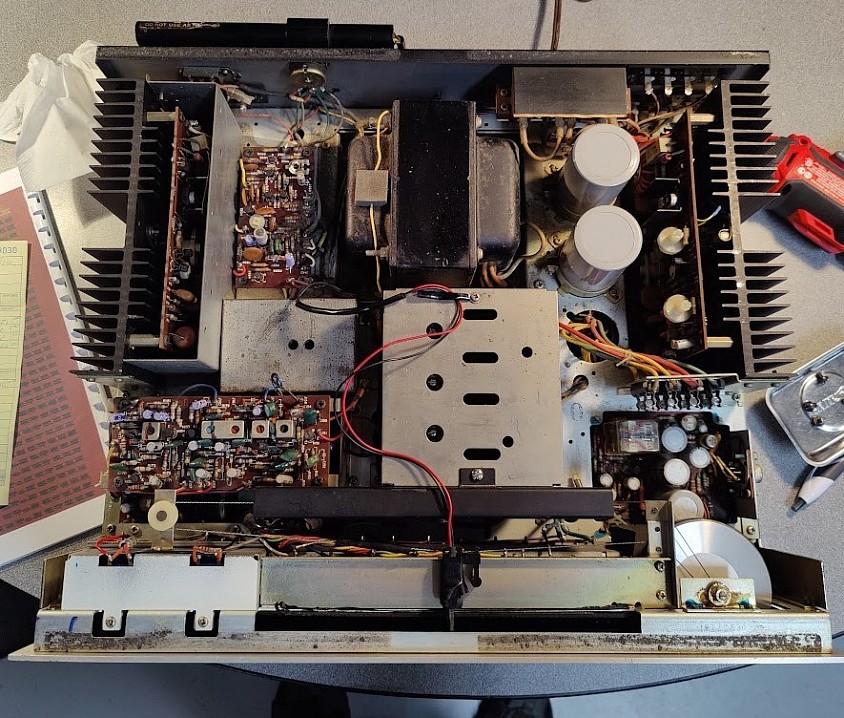
Marantz 2245 bench nudie
Marantz 2245
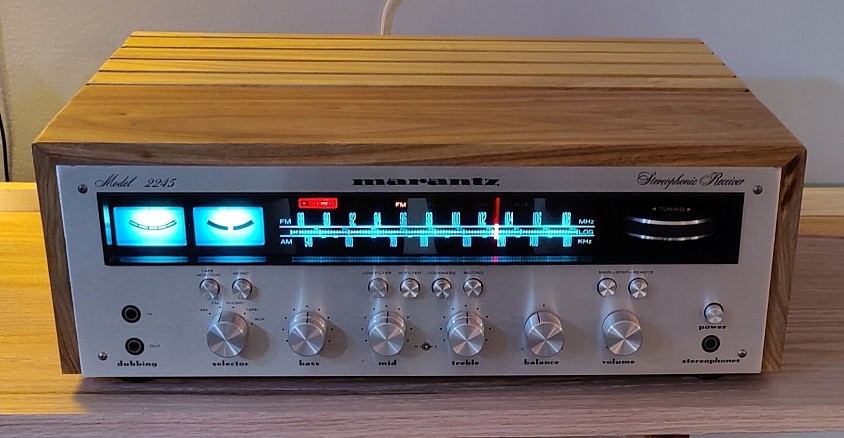
Marantz 2245 (shown with optional walnut cover)
('71-'76) 45 WPC $1400 (cover is *optional)
This Marantz 2245 is 100% completely functional and cosmetically superior. As per our intensive bench servicing, testing and cleaning, all inputs & outputs are fully functional. Additionally, bias and offset have been adjusted. All new lamps have been installed.
*NOTE: As shown in the photos, this beauty also has one of our optional hand-built, solid walnut covers that completely transforms the look of the 2245. Covers are priced from $250 depending on choice of wood.
Although entirely argumentative, the 22XX series from Marantz are widely acclaimed as the "best" of all. They used the best available parts when building the earlier series. This was a similar philosophy towards the design of the late 70's Concept units from Pacific Stereo. Essentially, Marantz had the foresight during the design process to engineer and build their units to last a very long time (provided the units were regularly serviced and kept in good shape over the years.
The Marantz 2245 receiver was produced from 1971 to around 1976 and put out a conservative 45 watts per channel into 8 ohms. It has that great look a the mid-70's Marantz receivers with its brushed aluminum face plate, blue tuning dial and the famous Marantz "Gyro-Touch" flywheel tuner.
Because the 2245 originally sold for around $449, that was considered a premium price when compared to (for example) the Pioneer SX-828 or Kenwood KR-5150.
The 2245 represented the mid-level model, and the little brother to the 2270. Still, the 2245 touted more guts, better features, and a better tuner section than the entry-level 2230. It wasn't just advertising when they said the Marantz also sounded "better", offering a slightly warmer sonic presentation along with decidedly more elegant cosmetics that many enthusiasts favorably compared to those of McIntosh. That somewhat warm and friendly tonal balance remains as probably the most important reason that Marantz receivers still rank above the other solid-state units from the same period.
The 2245 was made prior to the Marantz receivers' design change in the late 70's and did not have the hex-shaped bolts that secured the faceplate; instead it had screws.
Besides the usual bass/treble controls, it also has a mid-tone adjustment which is nice. It also has a low and high filter along with loudness and muting.
An interesting side note is that the 2245 is pretty much identical to the 2270 except for a few less features, smaller power transformer while the filter caps are identical on both. Some have claimed the sonic differences of the 2245 compared to the 2270 are so close that the biggest differences would (obviously) be the choice of speakers since the power output of the 2270 was greater than the 2245.
Basic specs:
Power output: 45 watts per channel into 8Ω (stereo)
Frequency response: 20Hz to 20kHz
THD: 0.3%
Damping factor: 45
Speaker load impedance: 4Ω to 16Ω
Dimensions: 18"W x 6.5"H x 14"D (including wood case)
Weight: 40 lbs (including wood cover)
+++++++++++++++++++++++++++
+++++++++++++++++++++++++++