
#2 TURNTABLES
About the stylus...
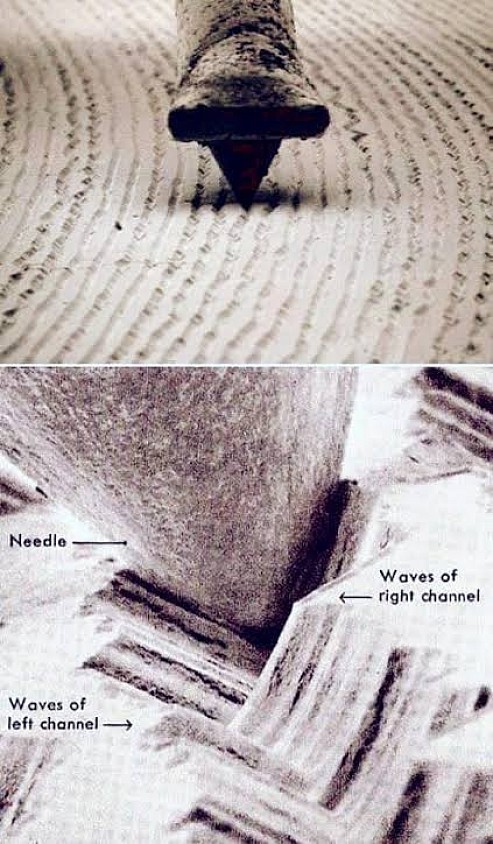
Electron microscope view of a stylus
How long can you expect a stylus (needle) to last on your turntable?
The average life expectancy of a high-quality turntable stylus is 800 to 1,000 playing hours, with advanced multi-contact profiles sometimes extending up to 1,200 to 2,000 hours under ideal conditions.
As we always tell our potential buyers "you must keep your records clean"
Lifespan by Stylus Profile
- Microlinear / MicroLine / Shibata / Garrot Brothers / etc:
Last 1,000 to 2,000 hours due to advanced shapes that distribute tracking friction over a larger groove surface area. - Elliptical: Last 300 to 500 hours for standard tiers, though high-end nude elliptical designs can reach higher with careful maintenance.
- Conical / Spherical: Last 500 hours on average.
Factors Affecting Lifespan
- Record Cleanliness: Playing dirty vinyl acts like sandpaper on the diamond tip, drastically reducing lifespan.
- Tracking Force: Exceeding manufacturer-recommended vertical tracking force accelerates physical wear.
- Alignment: Poor anti-skate or azimuth setup causes uneven, one-sided wear on the diamond profile.
Signs It Is Time to Replace
- Sound Degradation: A fuzzy, muddy, or distorted high-end response, especially on familiar inner grooves.
- Tracking Issues: The stylus starts jumping or tracking incorrectly on clean passages it previously navigated easily.
- Visual Inspection: Using a high-powered magnifying glass or USB microscope reveals flat spots or a misshapen tip.
Keep your records CLEAN! We highly recommend the "Studebaker SB-450" manual record cleaner on Amazon. It's very affordable and it actually works!!
++++++++++++++++++++++++
++++++++++++++++++++++++
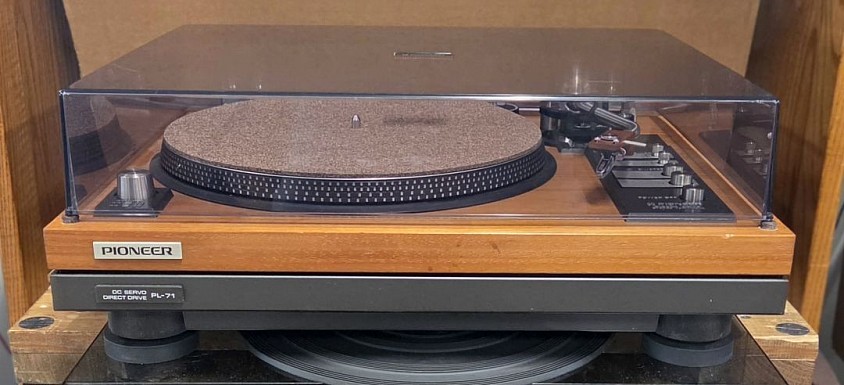
Pioneer PL-71
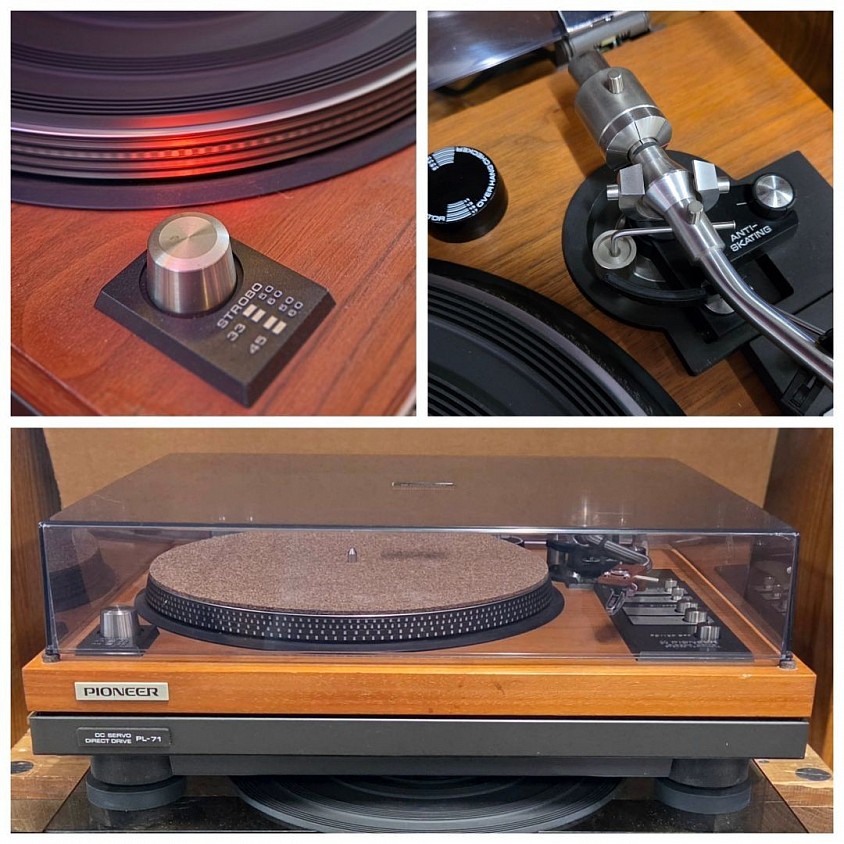
Pioneer PL-71
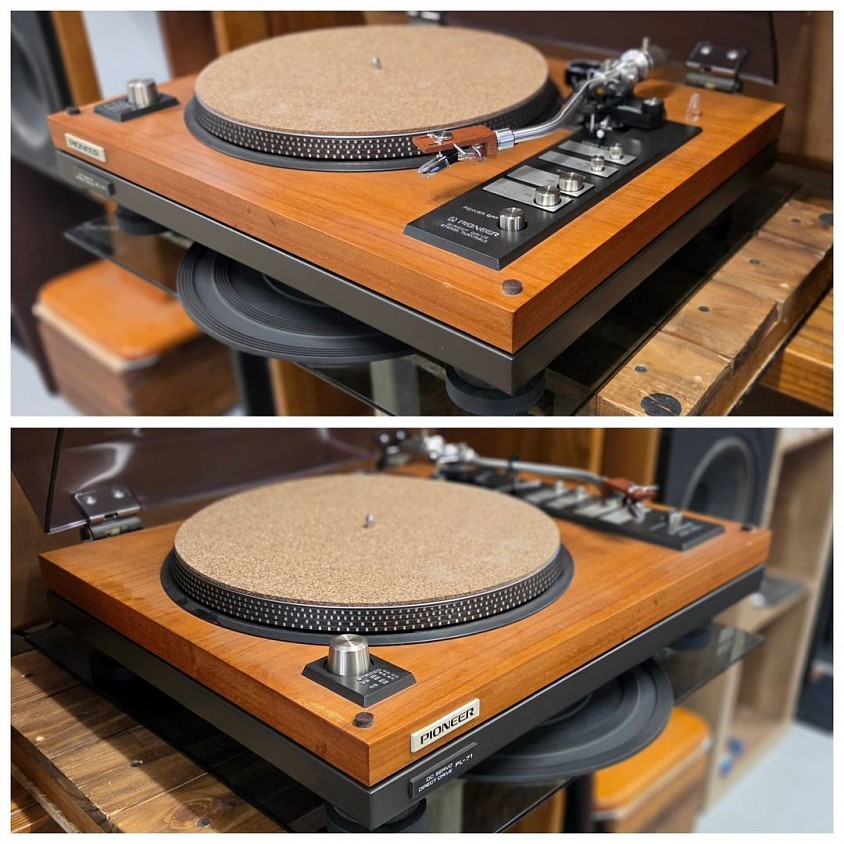
Pioneer PL-71
Pioneer PL-71
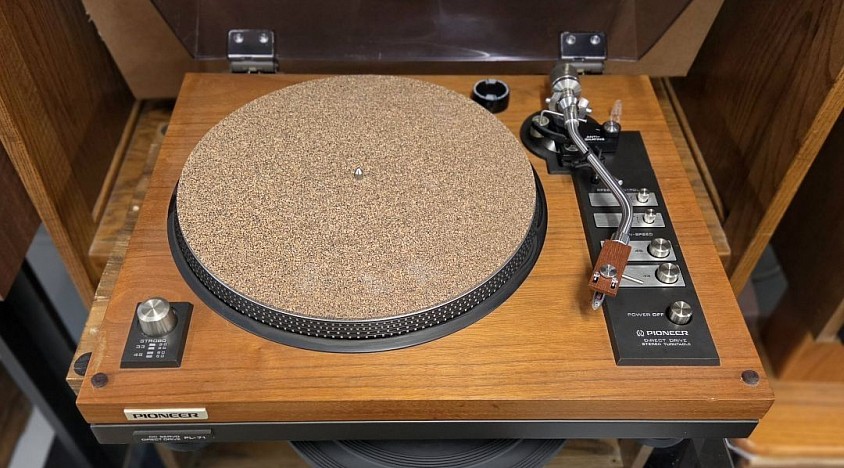
Pioneer PL-71
('73-'76) $650 (pristine)
Fully serviced and in excellent cosmetic condition, this Pioneer PL-71 is another masterpiece from the leader of Japanese electronics in the 70's. Its visual design and tightly controlled build quality has it firmly entrenched in the "upper class" of legendary direct-drive *manual units from Pioneer.
The PL-71 is from the series just before the PL-530 introduction. It was the top-of-the-line model with adjustable VTA (tonearm base height), a feature found only on the top models. Upon its introduction, it listed for $300 in 1974.
This all-electronic, direct-drive turntable has a brushless DC servo motor and super-sensitive S-shaped tonearm. The arm comes with a beautiful custom real timberwood headshell and a new Ortofon Super OM-10 cartridge & stylus.
The turntable comes with your choice of either the original factory platter mat or the attractive aftermarket "Corkey" (cork & rubber) platter mat.
The PL-71 is a dead quiet table that's virtually vibration-tree. The brushless DC servo motor directly rotates the platter without belts or rim idlers which means that vibration-causing factors are eliminated.
The sophisticated direct-drive system and all-electronic DC servo control reduce wow and flutter to less than 0.05% (WRMS) and boosts signal-to-noise ratio to better than 60dB -figures which place the PL-71 in the category of a "must have" for any serious collector.
The elegant controls are laid out in a cohesive manner; simply push the 33 (or 45 button) and the platter starts. Push the Power Off button and the platter stops. The surface is primarily wood, lots of beautiful wood. One of the features we really like...the output jacks are available, you can use your own high quality cables!
Other features include:
~Built-in strobe
~S-shaped tonearm that was specially developed by Pioneer to perform at light tracking pressures (0.59 and up)
~speed controls topside (with separate trim pots inside the unit)
~Lateral balancer with anti-skate combined with a direct-readout stylus pressure scale.
~Gentle oil damped cueing
~Lightly tinted and oversized dust cover with strong adjustable metal hinges.
The thick real walnut veneer covers the double construction cabinet to provide ideal mass for stability and resistance to external vibration. The original feet have additional custom foam pads to help eliminate resonance.
*NOTE:
Why is a manual the "best"?
All the design technology applied to the better manual turntables goes into the construction of the base, motor and tonearm. There are no additional mechanics to interfere and operate the movement of the arm or the auto start/stop functions. Pure and simple...that's what a manual unit does best.
Specs:
Type: Direct Drive
Motor: Brushless DC Servo Controlled Motor
Speeds: 33 And 45rpm
Speed Control Range: Within +-2%
Wow And Flutter: 0.05%
Rumble: More Than 60dB
Platter: 310mm Aluminium Alloy Diecast
Tonearm: Static-Balance Type, S-Shaped Pipe Arm
Cartridge Weight Range: 4 To 32g
Dimensions: 18.8"W X 7.3"H X 16.4"D
Weight: 25 Lbs
++++++++++++++++++++++++++++++
++++++++++++++++++++++++++++++
Reference 610T
Reference 610T
Reference 610T
Reference 610T
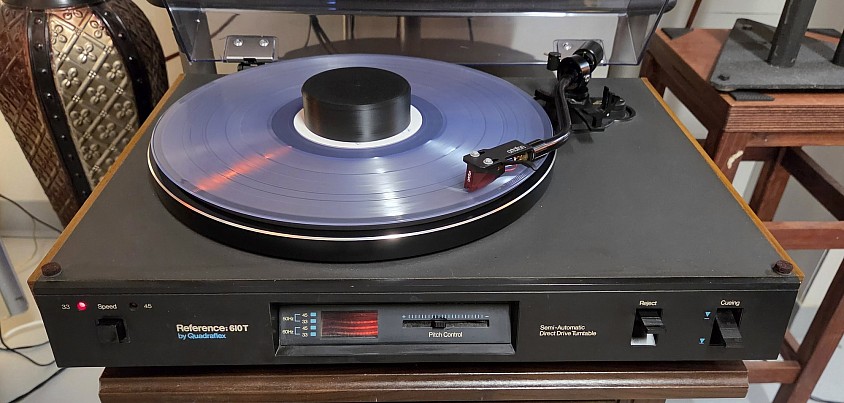
Reference 610T
(Pacific Stereo '78-'80) $450
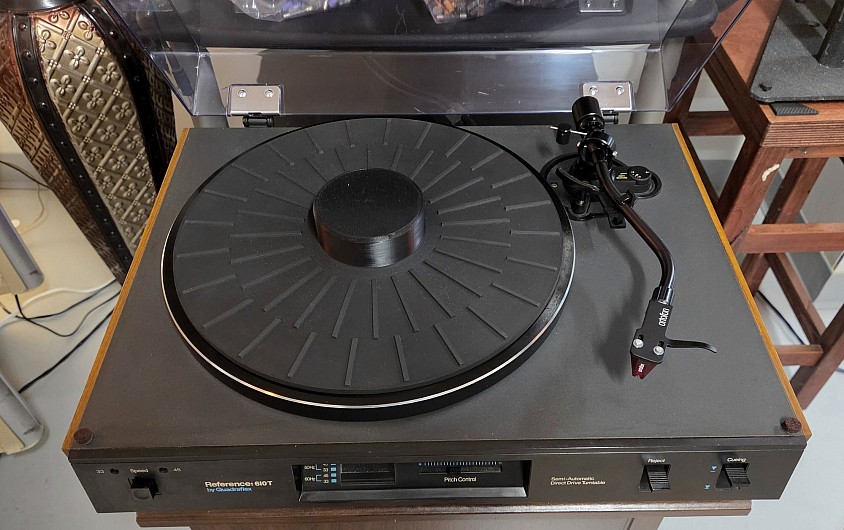
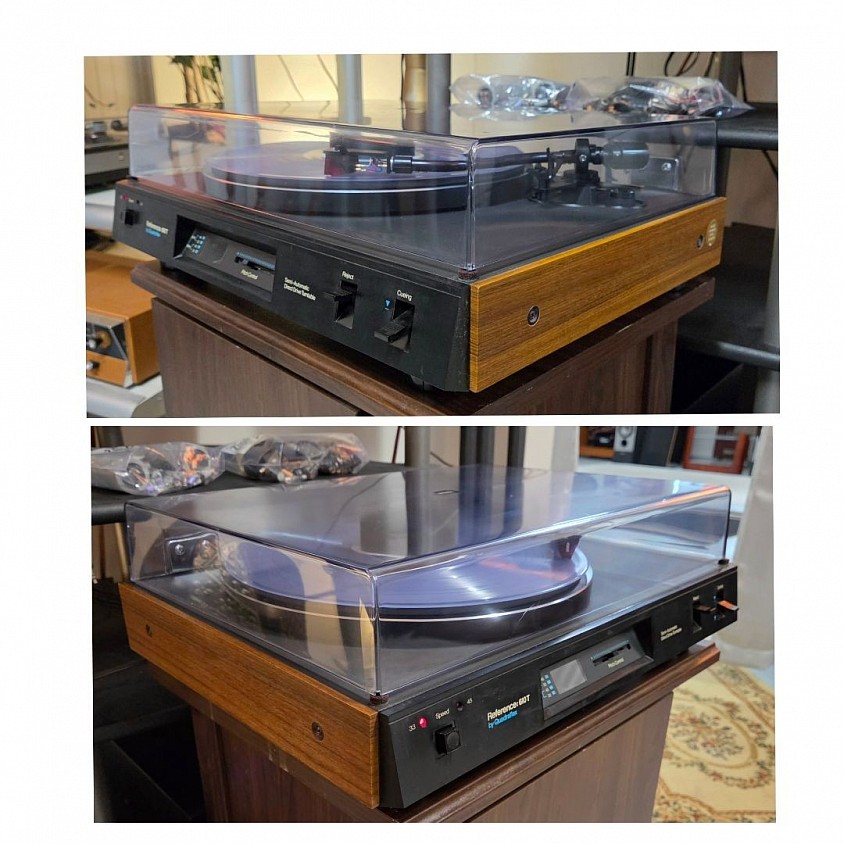
Elegantly designed and built in Japan by *CEC, this beautiful Reference 610T by Quadraflex is in excellent cosmetic condition, fully serviced and fully operational. The original dust cover has been hand polished and appears as new.
This is a DC direct drive, semi-automatic turntable with a topside strobe that allows accurate speed adjustments. At the end of play the arm returns and the motor shuts off.
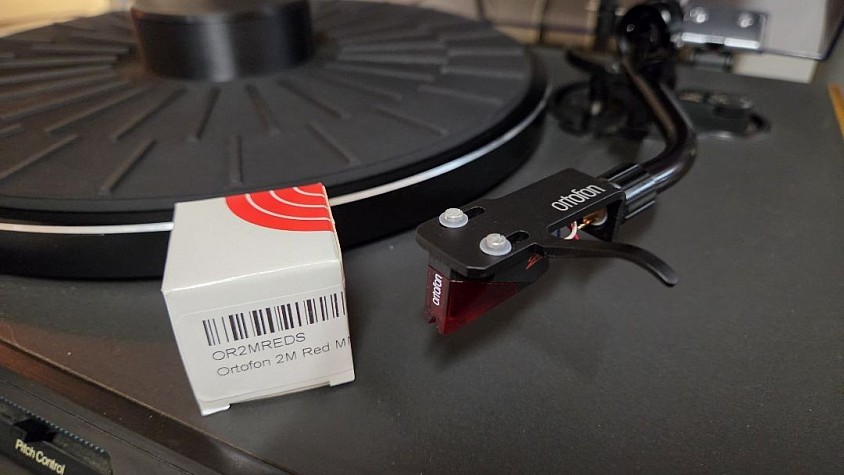
The satin black tonearm comes with a new Ortofon Red cartridge & stylus mounted on a premium Ortofon headshell. An extra, brand new stylus is also included. As a bonus, the turntable also comes with a pair of audiophile grade Pangea Audio XL interconnects (with attached and coated premium ground wire).
At a hefty 22 lbs, this 610T is a heavy, premium table with a massive die-cast platter, ultra low-mass, S-shaped static balanced tonearm; all nestled inside a beautiful satin-black plinth, blue silkscreen lettering, LEDs and featuring real timberwood side panels.
NOTE: Mostly built in either Japan or Korea, the Reference models were offered by **Pacific Stereo as their second-to-the-top tier house brands. (in order, top to bottom: Concept / Reference by Quadraflex / Quadraflex / TransAudio)
Pacific Stereo was only one of a few companies whose names were applied to this fine turntable. Originally designed and built by CEC, this model was also licensed to Project/One as the DR-770 (but without the timberwood side panels and having a silver tonearm as opposed to the satin black arm on the 610T.) CEC also released it under their own brand as the CEC DD-8200.
Basic specs:
Motor: 20 pole, 30 slot DC servo
Platter: die-cast aluminum alloy
Speed calibration: adjustable 3% +/- illuminated strobe
Dimensions: 18"W x 6.2"H x 13.2"D
Weight: 22 lbs
*About CEC Chuo Denki (Japan)...
The ultimate task of a high-end audio component is to breathe life into reproduced music and convey to the listener that the soul of the performer lives in each musical event. In 1954, when CEC was established, the audio industry was still in its infancy. For example, the field of drive motors for phono turntables was as yet largely unexplored.
CEC became the first company to make turntables in Japan, and our products were highly regarded by music lovers. CEC was one of the leading suppliers of turntables and CD players in the consumer field with major brand OEM customers including Grundig, Marantz, Teac, Reference by Quadraflex, Sony, Sanyo, Toshiba, Mitsubishi, Alpine, Kenwood, Sharp and many others.
**About Pacific Stereo...
Pacific Electronics store in Berkeley CA was the start in the early 60's and evolved into the first Pacific Stereo store when Ted Bennett, Tom Anderson and Charlie Haste purchased PE, became managing partners and started to expand a stereo retail store chain. The second store to open was SF. The third was Walnut Creek. In the early '70's. CBS bought out Pacific Stereo and,k eventually, stores started to open up and down the SF Peninsula (San Mateo, San Jose), then into Southern California and finally across the USA. It's been said that after CBS purchased PS in the early 70's, it became the largest stereo retail chain in the world!
NOTE: On the personal side, working for Pacific Stereo in their Walnut Creek store in '68 was a formative experience for me at the time. The Walnut Creek store was one of only three stores with the other two being San Francisco and Berkeley. As one of two guys in the warehouse, I made regular runs into the SF store to either pick up or transfer equipment. These were heady days back then, the crackle in the air was always buzzing with excitement with new products coming out almost every day it seemed. One of, if not the most memorable moment, was meeting Armand Bose (Bose speakers) himself. We had no prior notice he was coming other than a huge buzz in the store that morning. This was in the latter part of '68 as I recall (!?) and we were running around in the store setting things up for a demo. Dr Bose arrived accompanied by another helper or two, they unpacked the strangest looking speakers I'd seen to date. They managed to hang these weird boxes from the corners of the main floor ceiling with chains that hooked onto the top of the speakers. A pre-chosen LP, ("Bookends" by Simon & Garfunkel as they were very hot in the music biz at that time) was placed on a turntable and they carefully positioned the tonearm over the track "America" and when that needle hit the groove, and the song began to build, I remember distinctly looking around the room (there were at least 8 or 9 guys standing around) and everyone was honestly blown away...all looking at each other, collectively thinking "what in the hell are those speakers?" As it turned out this was one of the first private demos of the original Bose 901s as a means of hopefully drumming up future orders from dealers. Needless to say, it was quite an experience. I was only 21 years old but already hooked on the likes of the Fisher 500C (my first stereo receiver), McIntosh, etc, Dave Brubeck, etc and living in the San Francisco Bay Area in the late 60's. What more could a poor boy ask for?
+++++++++++++++++++++++++++++
+++++++++++++++++++++++++++++
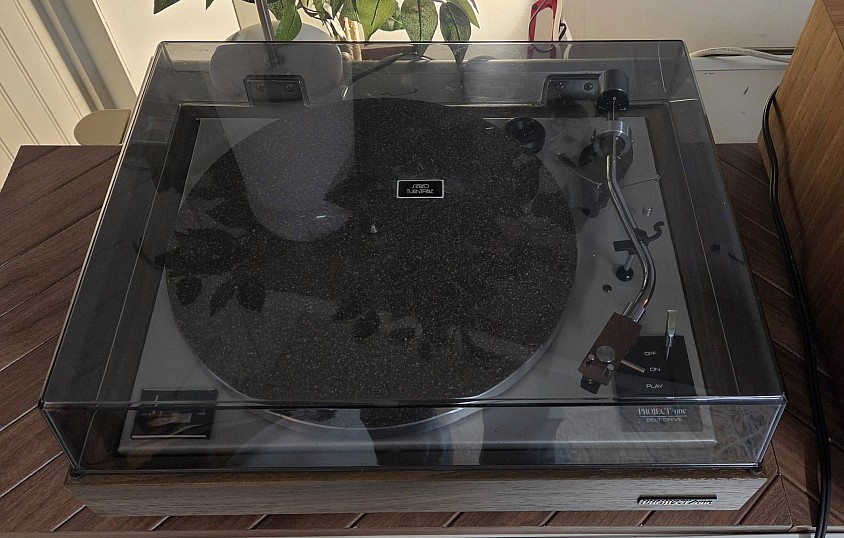
Project/One DR-1
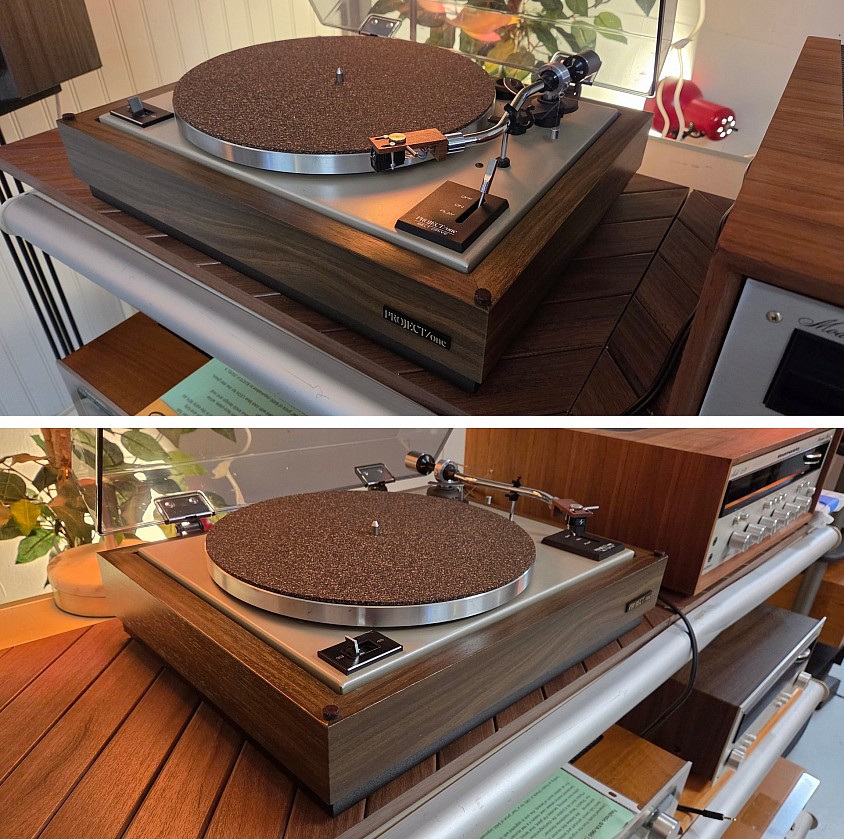
Project/One DR-1
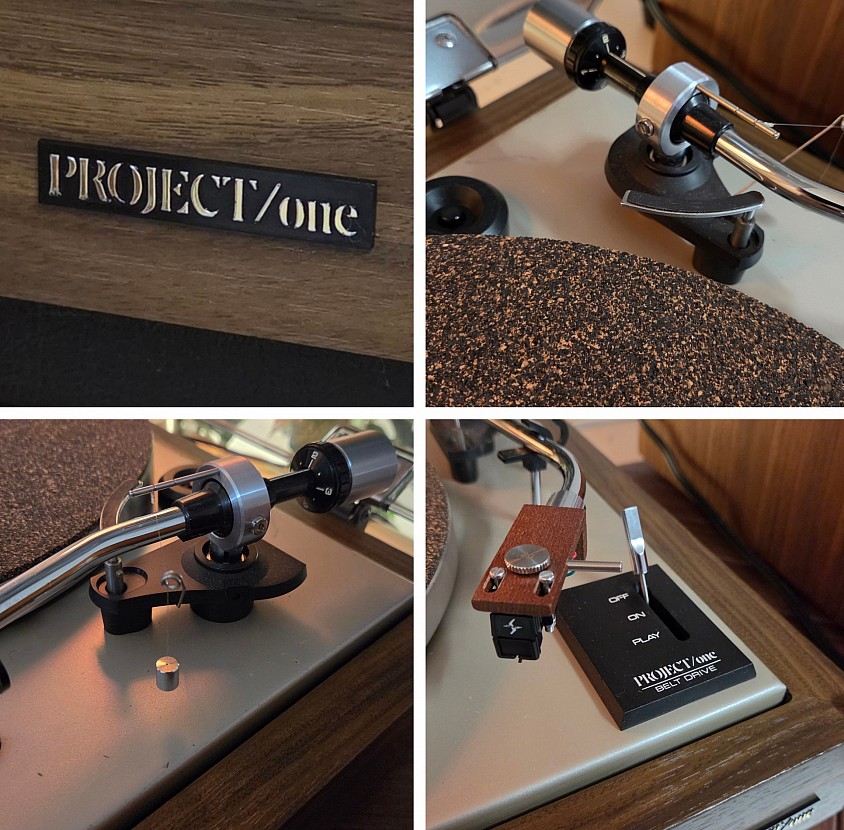
Project/One DR-1
Project/One DR-1
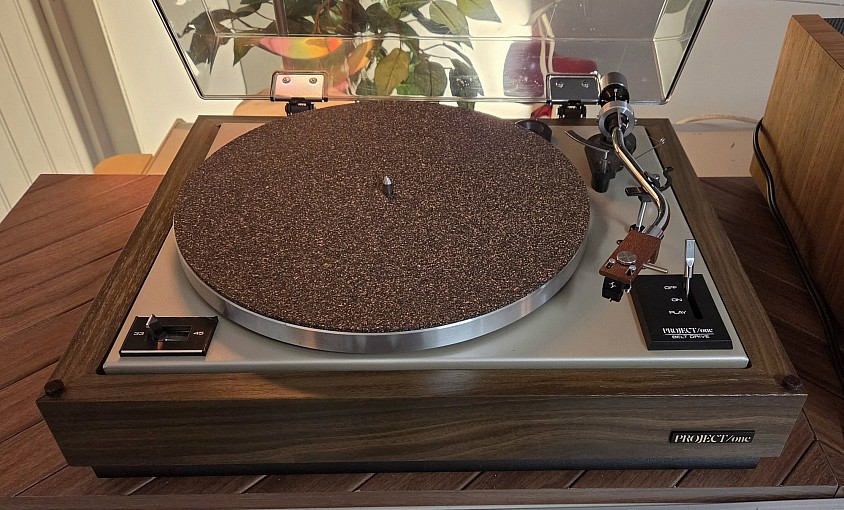
Project/One DR-1
(Japan '78-'79) SOLD
In excellent cosmetic condition, fully serviced and operating perfectly, this Project/One DR-1 turntable is NOT affiliated with the other "Pro-Ject" turntable company (see "About Project/One " below). It was designed and built by *CEC (Chuo-Denki) in Japan. Perhaps, for comparison, the Pioneer PL-12D is very similar in both design and operation.
The DR-1 is a 2-speed turntable; it has a very solid build, it's beautiful and it's a **manually-operated unit. The tonearm has an aftermarket solid timberwood headshell that comes mounted with a very nice Shure M91ED cartridge and new stylus. The aftermarket "Corkey" rubber & cork platter mat is a perfect complement to the turntable's walnut veneer base. Features include the original chrome "dongle" anti-skate, lateral balancer, direct-reading counterweight, and hydraulic cueing
Specs:
Type: Manual belt-drive turntable
Speeds: 33⅓ and 45 rpm
Motor: 4-pole synchronous motor
Speed Accuracy: Less than or equal to 1.0%
Wow and Flutter: Less than 0.1% WRMS
Dimensions: 16.9"W x 6.3"H x 13.7"D
Weight: 15 lbs
*About CEC Chuo Denki (Japan)...
The ultimate task of a high-end audio component is to breathe life into reproduced music and convey to the listener that the soul of the performer lives in each musical event. In 1954, when CEC was established, the audio industry was still in its infancy. For example, the field of drive motors for phono turntables was as yet largely unexplored.
CEC became the first company to make turntables in Japan, and our products were highly regarded by music lovers. CEC was one of the leading suppliers of turntables and CD players in the consumer field with major brand OEM customers including Grundig, Marantz, Teac, Reference by Quadraflex, Sony, Sanyo, Toshiba, Mitsubishi, Alpine, Kenwood, Sharp and many others.
**NOTE:
Why is a manual the "best"?
All the design technology applied to the better manual turntables goes into the construction of the base, motor and tonearm. There are no additional mechanics to interfere and operate the movement of the arm or the auto start/stop functions. Pure and simple...that's what a manual unit does best.
About Project/One...
Often confused with the other "ProJect" (those turntables are currently made in Czechoslovakia), Project/One is a completely different brand with no connection whatsoever.At one time, during the 70's and 80's, there were many HiFi shops and electronics chain stores all over the country. The West Coast was dominated by Pacific Stereo (Concept and Reference models), University Stereo and a few other smaller outfits while the Midwest was covered by the "Playback" chain of stores (their motto was "the electronics playground"). Besides the usual big names (Pioneer, Sansui, Yamaha, etc) Playback also had their own house brands. Project/One was their top tier line (followed by the Skanda, and Kingsway models).
The very early Project/One receivers were "rumored" to be made by Pioneer (?) and rebranded by Playback. Hence, today, some of the better earlier receivers like the "Mark IV" and some of the other gear (like turntables and tape decks) might now be considered collectible and are beginning to command higher prices. As the mid-70's rolled out, Project/One equipment eventually was sourced to other Japanese suppliers.
++++++++++++++++++++++++++
++++++++++++++++++++++++++